
Shamrock Precision: Precision-Engineered Components for Oil & Gas Operations
The Federal Reserve Bank of Dallas's quarterly energy survey doesn't parse sentiment; it measures it. In Q1 2026, the results were unambiguous. The business activity index for oil and gas firms in the Eleventh Federal Reserve District, the broadest measure of conditions facing Texas energy companies, jumped from -6.2 in Q4 2025 to 21.0 in Q1 2026, crossing decisively into expansion territory. The company outlook index moved from -15.2 to 32.2 in the same period. Both readings represent the sharpest positive turn in multiple quarters.
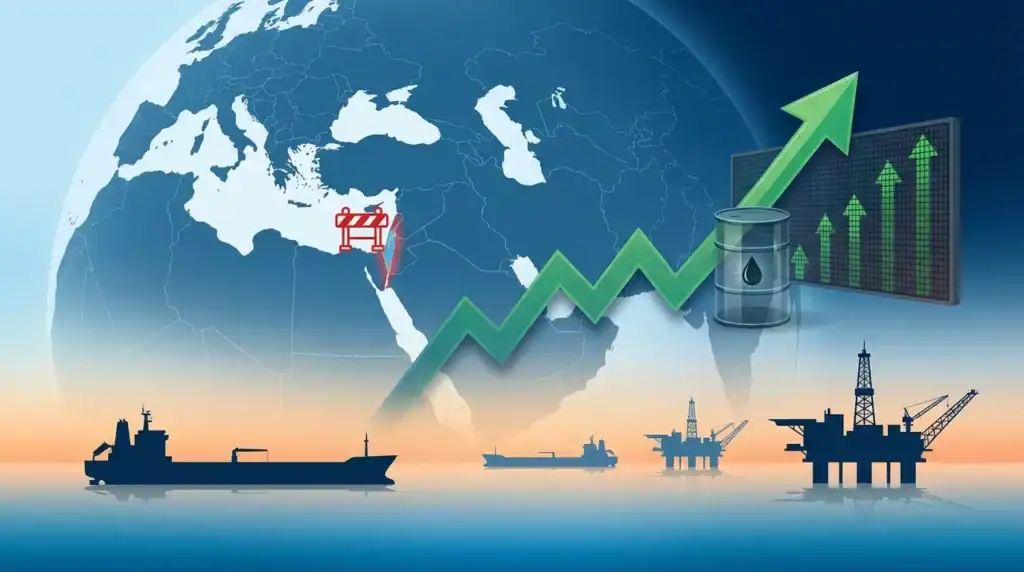
The catalyst is documented. One Permian Basin E&P executive summarized it directly in the survey's open-response section: "Geopolitical factors have roared back in global commodity pricing. Crude and natural gas prices have increased because of the Iran war, which has disrupted global energy supplies mostly due to issues in the Strait of Hormuz constraining shipping."
For the full picture on what the Strait of Hormuz closure means for American oil and gas supply chains-and why the disruption registers in Texas regardless of U.S. import dependency-see Strait of Hormuz Closure Sends Shockwaves Through U.S. Oil and Gas Supply Chains.
The Permian Basin's Position Heading Into 2026
Before the Hormuz closure on February 28, 2026, the Permian Basin was already the dominant force in U.S. crude oil production by a substantial margin. The EIA's March 2026 Short-Term Energy Outlook confirms that shale and tight formations within the Permian produced 6.0 million barrels per day in December 2025-44% of total U.S. crude oil output. To put that in perspective, Permian production at that level would rank third in the world if measured as a standalone nation, behind only Saudi Arabia and Russia.
The Basin had achieved that output against a 2025 average WTI price of $65 per barrel, an environment the EIA had characterized as below the breakeven threshold for many operators. The agency's pre-conflict 2026 forecast projected a modest production slowdown as price pressure weighed on drilling economics. That forecast has been revised. The March 2026 STEO increased the Permian production outlook by 6% through 2027, citing elevated prices and expanded pipeline capacity-including the Matterhorn Express Pipeline serving the Waha Hub in West Texas-as primary drivers of the upward revision.
With WTI crude now running approximately 41% above late-February levels and approaching $95 per barrel, the economics of Permian drilling have been fundamentally reset. What was marginal at $65 is profitable at $95. What was profitable at $65 is now generating cash flows that fund accelerated activity.
What Operators Are Actually Saying and Doing
The Dallas Fed Energy Survey for Q1 2026 captures both the opportunity and the caution that currently define the Texas oil patch. Half of E&P executives reported no change to their 2026 drilling plans as of the survey date-a finding that reflects operational discipline and the time required to convert higher prices into additional rig activity, rather than hesitation about the price signal itself.
Break-even prices in the Permian Basin average $67 per barrel, up from $65 in the prior year's survey. The increase reflects rising input costs-services, materials, and labor-that have climbed alongside crude prices. Large producers with output above 10,000 barrels per day report break-evens of $59 per barrel; smaller independents average $68. At $95 WTI, both categories are operating with margins not seen since before the 2022 drawdown cycle.
The survey's open responses reveal the complexity of planning in a high-volatility environment. "Suppliers are already trying to increase pricing," one executive noted, "and the administration continues to try and talk down prices. How sustainable are current oil prices? Hard to make long-term commitments." Another framed the uncertainty operationally: "In the quarter ahead, all pricing is uncertain until safe navigation through the Strait of Hormuz can be achieved. Any short- or long-term planning has been put on hold for the next two to three months."
That measured posture is consistent with historical patterns. When crude prices spike abruptly from geopolitical events rather than demand-side growth, operators tend to let cash flow build for one to two quarters before committing to accelerated drilling programs. The Q1 2026 activity index already crossing into expansion-before that deployment cycle has fully begun-suggests that the pace of drilling activity through Q2 and Q3 2026 will be shaped substantially by the duration and resolution of the Hormuz disruption.
Pipeline Infrastructure and Associated Gas
One factor specific to the Permian that amplifies the price response is the Basin's natural gas infrastructure position. The EIA's March 2026 outlook notes that expanded pipeline capacity from the Permian-including capacity additions scheduled to come online in 2026-will allow more associated natural gas to reach market alongside increased oil-directed drilling. This creates a dual production incentive: operators drilling for oil in the Permian now have better infrastructure to monetize the natural gas produced alongside crude, reducing the longstanding problem of negative-price natural gas at the Waha Hub that historically constrained drilling returns.
The Corpus Christi LNG facility Stage 3 Train 5 was completed in February 2026, and Golden Pass Train 1 is scheduled to come online in March, adding LNG export capacity at the Gulf Coast. While EIA projects U.S. natural gas prices to be relatively insulated from the LNG disruptions caused by the Hormuz closure-given limitations on additional near-term export volumes-the pipeline infrastructure improvements mean that Permian operators are better positioned than at any prior point to capture value from associated gas production.
Component Demand Rises With Drilling Tempo
Elevated crude prices and improving drilling economics translate directly into higher activity levels-and higher activity levels translate directly into increased demand for every component in the drilling string. Non-productive time, measured in idle rig hours, becomes substantially more expensive at $95 WTI than it was at $65. Day rates for rigs, already climbing as activity expands, compound that calculation.
The specific economics of downhole equipment failures in an elevated-price environment-and the documented cost per day of unplanned drilling downtime-are covered in detail in Downhole Equipment Failures and the Hidden Cost of Supply Chain Pressure on U.S. Drillers.
What the Dallas Fed data and EIA production forecasts confirm is that the Permian Basin and the broader Texas oil and gas sector are entering an accelerated phase of activity driven directly by the Hormuz-triggered price environment. For precision component manufacturers serving domestic operators, that acceleration represents both a demand increase and a quality standard that tightens with every dollar added to the crude price.
Shamrock Precision: Precision-Engineered Shear Screws for Oil & Gas Operations
Since 1981, Shamrock Precision has manufactured precision components for oil and gas drilling operations across the Permian Basin, Eagle Ford, Bakken, and offshore Gulf programs from its Dallas, Texas facility.
Our Services Include:
- Shear Screws for Oil & Gas - Swiss CNC-machined to thread tolerances of 0.0005 inches, available in Inconel, stainless steel, brass, and aluminum. ISO 9001 and AS9100 certified. Every batch is documented and tested.
Ready to Discuss Your 2026 Drilling Program? Contact Shamrock Precision to request shear screw specifications or volume pricing.
Works Cited
"Oil and Gas Activity Rises Amid Elevated Uncertainty." Federal Reserve Bank of Dallas Energy Survey, Q1 2026, www.dallasfed.org/research/surveys/des/2026/2601. Accessed 25 Mar. 2026.
"EIA Refines Estimates for Permian Tight Oil and Shale Gas Production." U.S. Energy Information Administration, U.S. Department of Energy, www.eia.gov/todayinenergy/detail.php?id=67364. Accessed 25 Mar. 2026.
Related Articles
- Strait of Hormuz Closure Sends Shockwaves Through U.S. Oil and Gas Supply Chains
- Downhole Equipment Failures and the Hidden Cost of Supply Chain Pressure on U.S. Drillers