Shamrock Precision Engineering Team

The Shamrock Precision Engineering Team brings decades of hands-on experience in CNC turning, CNC milling, Swiss machining, and aerospace component manufacturing from our AS9100 and ISO 9001 certified facility in Dallas, TX.

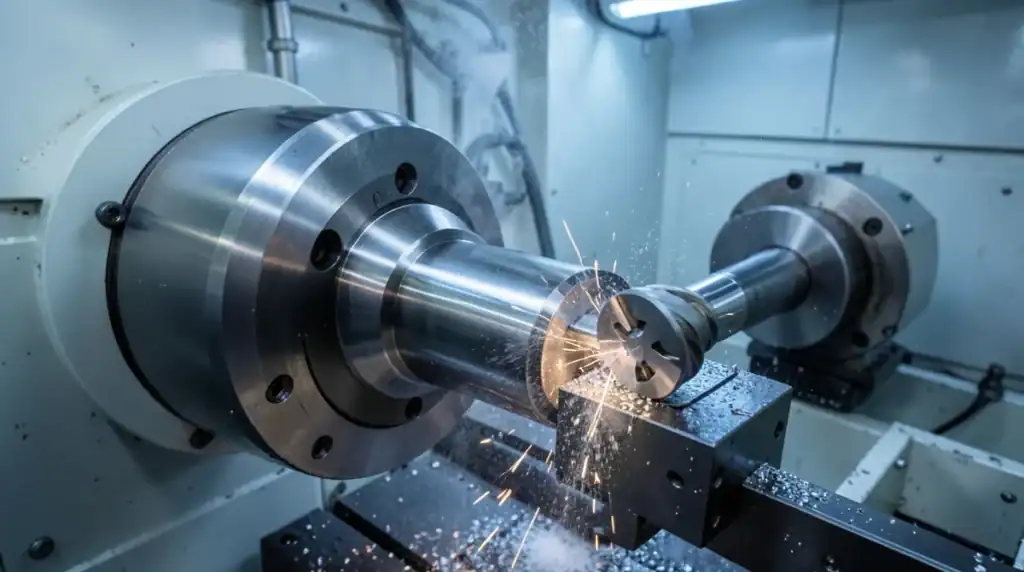
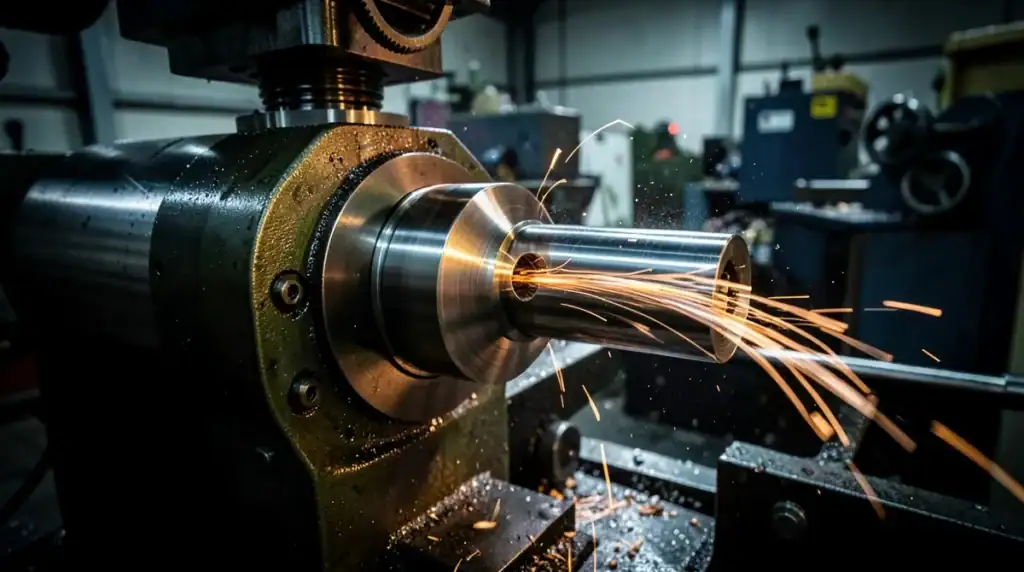
CNC lathe turning stainless steel bar with chips curling off the insert

What Drives the Cost of a Turned Part

A turned part is quoted per job rather than priced from a list. Five things on the drawing shape the number: how many setups the geometry requires, the tolerance on the tightest feature, the material specified, the quantity ordered, and the inspection documentation the program calls for. Shamrock Precision quotes from the print. Shamrock Precision […]

What Drives the Cost of a Turned Part Read More »
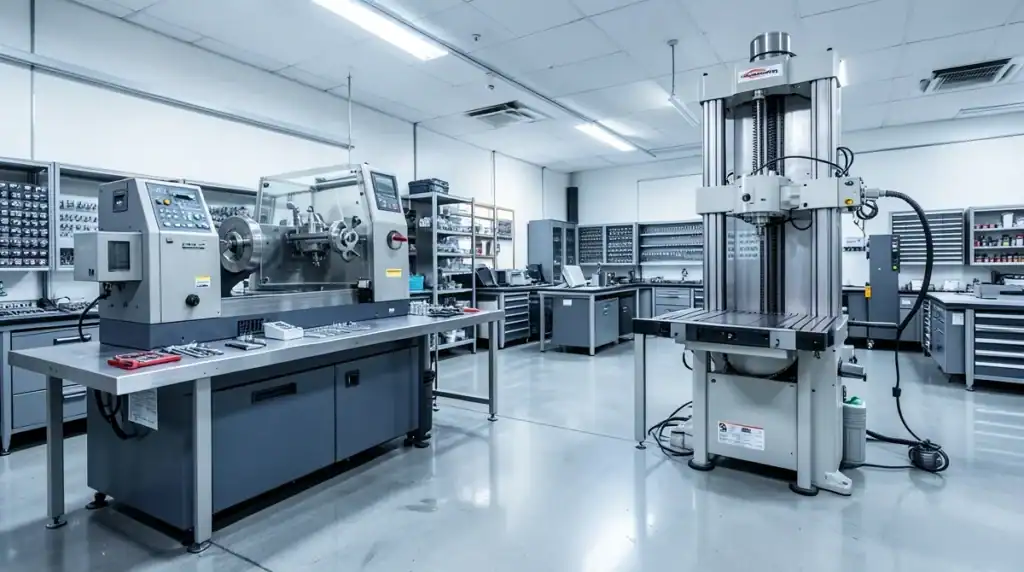
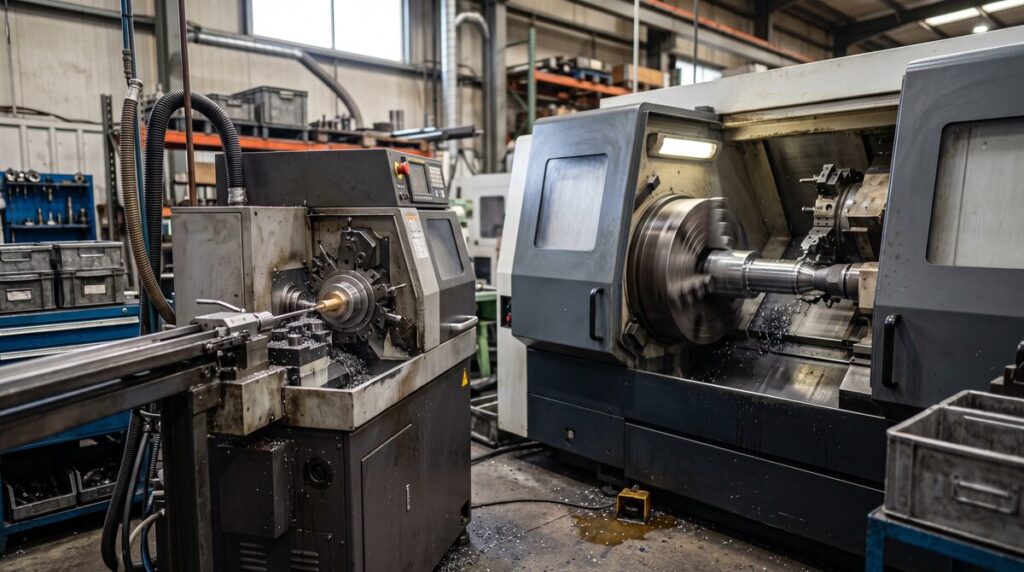
CNC lathe and vertical machining center on a machine shop floor

CNC Turning vs CNC Milling: Which Process Fits Your Part

In CNC turning, the workpiece rotates against a fixed cutting tool. In CNC milling, the tool rotates against a fixed workpiece. That single reversal decides which process suits a part: turning produces cylindrical geometry such as shafts, pins, bolts, and fasteners, while milling produces prismatic geometry. Shamrock Precision is an ISO 9001 and AS9100 certified

CNC Turning vs CNC Milling: Which Process Fits Your Part Read More »

Multi-axis CNC turning center with live tooling cutting a steel shaft

Multi-Axis CNC Turning: What Extra Axes Actually Change on a Turned Part

Multi-axis CNC turning adds milling capability and additional axes of movement to a turning center, so complex features, off-center holes, and contoured surfaces can be machined in a single setup. Shamrock Precision runs 4-axis and 7-axis turning in Dallas, Texas, where a 7-axis machine completes parts that would need several setups or several machines without

Multi-Axis CNC Turning: What Extra Axes Actually Change on a Turned Part Read More »

Swiss-type lathe and a conventional CNC turning centre in the same machine shop bay, both running, scale difference clear...

Swiss Machining and Conventional Turning: How the Two Processes Differ for Small-Diameter Oil Field Components

Oil field prints frequently specify small-diameter turned components. Two turning processes are commonly used to produce them, and the published descriptions of each differ on one point: where the material is supported during the cut. How the two processes are described Shamrock Precision publishes that Swiss machining supports the bar stock with a guide bushing

Swiss Machining and Conventional Turning: How the Two Processes Differ for Small-Diameter Oil Field Components Read More »

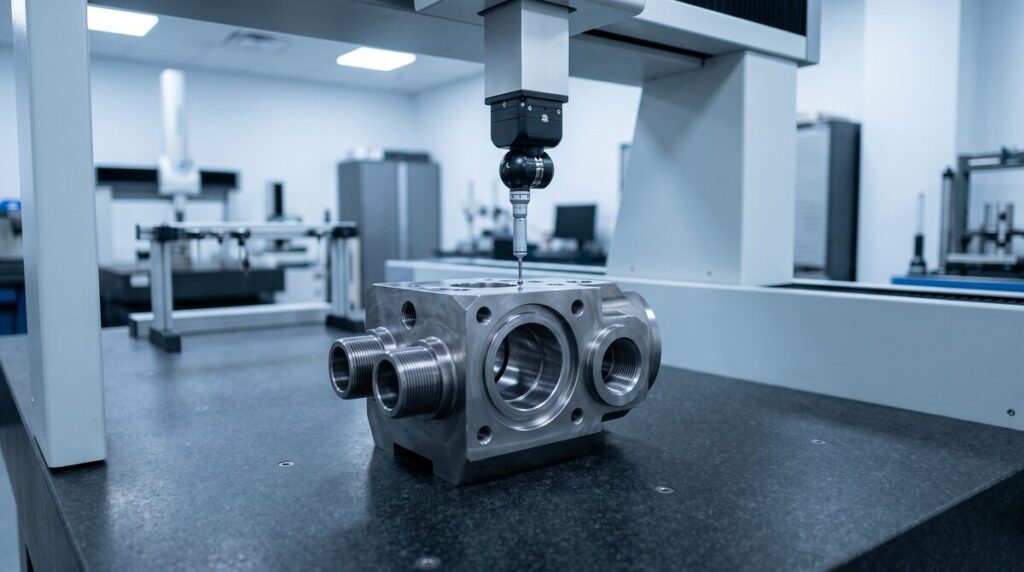
CMM inspecting a machined oilfield component on a granite table in a temperature-controlled quality lab, probe poised...

Supplier Qualification in Oil and Gas: Texas Permit Data and the 2026 ISO 9001 Revision

Two dated items bear on how oil and gas buyers approach machine shop supplier qualification for the remainder of 2026. One is Texas permitting activity. The other is a scheduled revision to the quality management standard most machine shop certificates are issued against. Texas drilling permits, July 2026 The Railroad Commission of Texas reported issuing

Supplier Qualification in Oil and Gas: Texas Permit Data and the 2026 ISO 9001 Revision Read More »

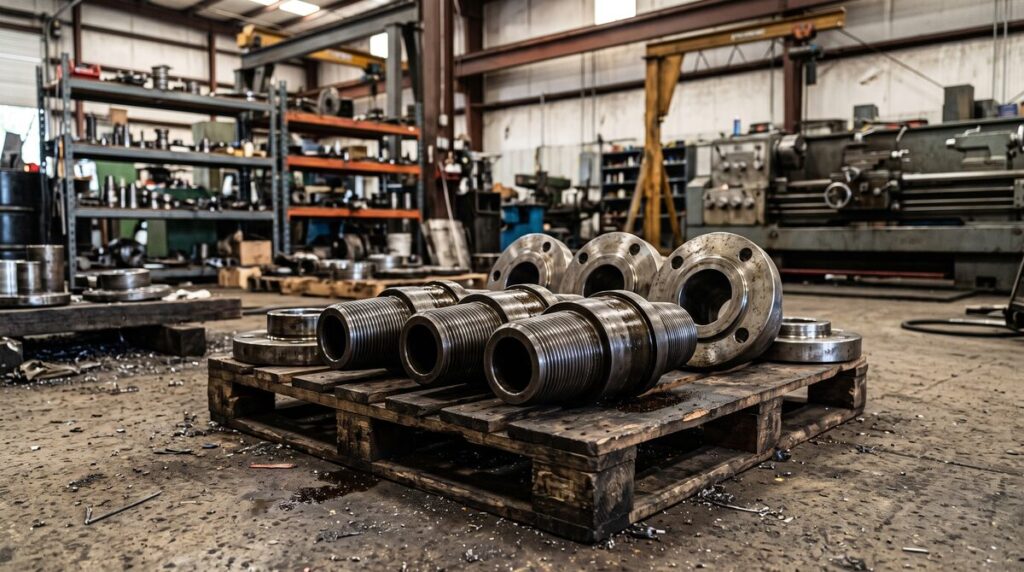
Machined oilfield components laid out on a shop floor pallet, heavy threaded steel bodies and flanges, a machine shop bay...

Oil and Gas Component Sourcing Heading Into 2027: What the 2026 Data Shows

Two published data sources describe the conditions oil and gas buyers are working in through the end of 2026. One measures production and price. The other records what firms operating in the region report about cost and supply. What the EIA forecasts for production and price In its August 2026 Short-Term Energy Outlook, released August

Oil and Gas Component Sourcing Heading Into 2027: What the 2026 Data Shows Read More »

LNG export terminal at night: cryogenic storage tanks and insulated pipework lit against dark water, vapour drifting

U.S. LNG Is Absorbing Qatar’s Lost Volumes and Pulling Gas Drilling With It

The single most consequential fact in the global gas market right now is a repair timeline. An attack on Qatar’s Ras Laffan export facility on March 18 damaged two liquefaction trains and knocked out 17 percent of the country’s LNG export capacity. QatarEnergy estimates the repairs could take up to five years. Combined with the

U.S. LNG Is Absorbing Qatar’s Lost Volumes and Pulling Gas Drilling With It Read More »

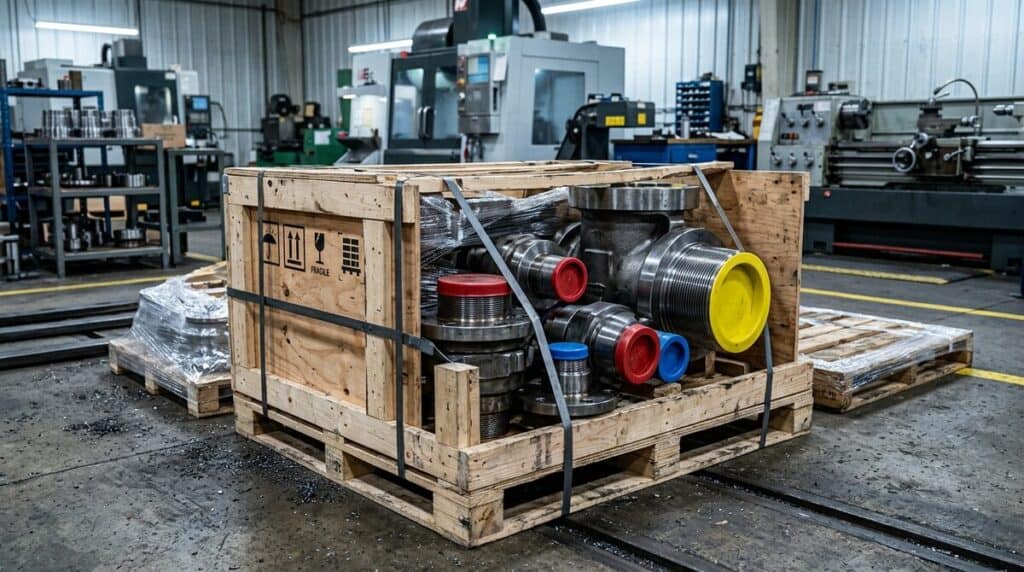
Precision-machined oilfield components, couplings and valve bodies, crated and banded for shipment on a machine shop...

Oilfield Equipment Lead Times Are Stretching as Tariff Rules Rewrite the Sourcing Math

Operators across Texas and the Gulf Coast are running into a problem that had largely vanished from procurement conversations since 2022: the part does not show up on time. The Federal Reserve Bank of Dallas Energy Survey for the second quarter of 2026 put a number on it. The supplier delivery time index jumped from

Oilfield Equipment Lead Times Are Stretching as Tariff Rules Rewrite the Sourcing Math Read More »

Pump jack silhouetted against a heavy overcast dusk, muted orange breaking through grey cloud, flat terrain running to...

The Federal Oil Price Forecast Assumed Peace. The War Resumed Three Weeks Later.

On July 7, the U.S. Energy Information Administration published a forecast built on the assumption that the war was over. The July Short-Term Energy Outlook took as its premise the June 18 memorandum of understanding between the United States and Iran, which formalized a sixty-day ceasefire and reopened the Strait of Hormuz. Working from that

The Federal Oil Price Forecast Assumed Peace. The War Resumed Three Weeks Later. Read More »

How Swiss Machining Delivers Aerospace’s Tightest Tolerances at Production Volume

Shamrock Precision: Aerospace Machining Services in Dallas, Texas Aerospace component drawings routinely specify tolerances measured in tenths of thousandths of an inch-±0.0005 inches across critical features, with surface finishes that determine whether the part performs to specification or fails in service. Conventional turning equipment can occasionally achieve those tolerances on simple, short geometries; conventional turning

How Swiss Machining Delivers Aerospace’s Tightest Tolerances at Production Volume Read More »