
Shamrock Precision: Precision-Engineered Components for Oil & Gas Operations
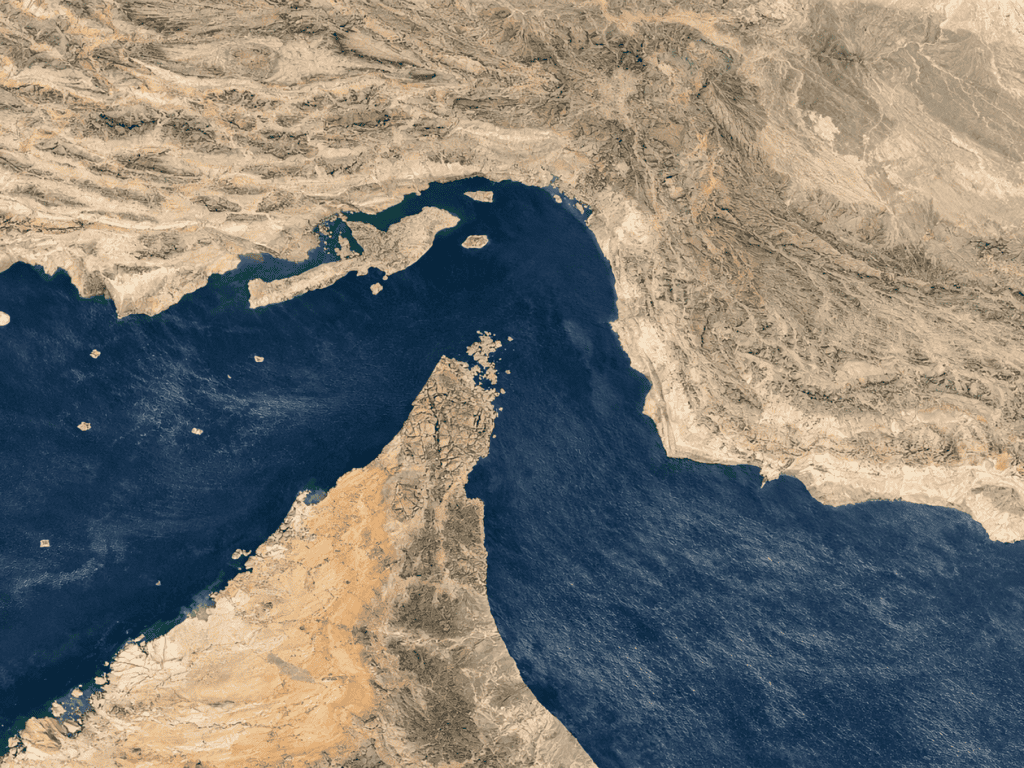
On February 28, 2026, tanker traffic through the Strait of Hormuz—the 21-mile-wide chokepoint connecting the Persian Gulf to global energy markets—collapsed. The International Energy Agency described the resulting flow of oil as slowed to a trickle. From March 1 through March 23, cargo carriers made just 138 crossings according to analytics firm Kpler, representing a 95% decline from pre-closure levels. The world's single most important maritime energy corridor had, for the first time in history, effectively stopped functioning.
The immediate and ongoing economic consequences for the United States and the global oil industry are documented, measurable, and unfolding in real time across every sector touched by energy pricing—from Gulf Coast refineries to the pump price of gasoline in Texas.
What the Strait of Hormuz Actually Carries
To understand the disruption, the numbers require context. According to the U.S. Energy Information Administration, oil flows through the Strait in 2024 and into early 2025 averaged 20 million barrels per day, accounting for more than one-quarter of all global seaborne oil trade and approximately one-fifth of total global petroleum liquids consumption. Roughly 20% of global liquefied natural gas trade also transited the Strait annually, primarily from Qatar.
In 2024, the United States imported approximately 0.5 million barrels per day through Hormuz—representing about 7% of total U.S. crude imports and just 2% of domestic petroleum liquids consumption. That relatively modest direct exposure has led some to minimize American vulnerability to a Hormuz disruption. Energy economists consistently reject that framing.
"The US is definitely affected," Rice University Baker Institute energy fellow Mark Finley told FactCheck.org. "If something goes wrong anywhere, the price goes up everywhere." He noted that while U.S. oil producers benefit from higher prices, consumers and businesses "bear the burden of higher prices at the pump as well as on everything that uses oil."
The price transmission has been direct and swift. Since the closure, West Texas Intermediate crude—the U.S. benchmark—climbed approximately 41% to nearly $95 per barrel. Brent crude, the international standard, rose roughly 32%. The average retail price of regular-grade gasoline in the United States reached $3.50 per gallon by the week ending March 9, a 56-cent increase in roughly two weeks. By mid-March, U.S. gasoline prices were approaching $4 per gallon according to AAA data, with California surpassing $5.
The EIA's revised 2026 forecast now projects average U.S. gasoline costs at $3.34 per gallon for the full year—up from a pre-conflict forecast of $2.91—with prices not expected to fall below $3.00 at any point through the end of 2027, even under scenarios where strait transit partially resumes.
A Disruption Without Precedent in Modern Energy History
The IEA has characterized the current situation as the greatest global energy security challenge in history and the largest oil supply disruption on record. That assessment is supported by the comparative scale of prior events.
The 1973 Yom Kippur War removed roughly 6% of global oil supply from the market. The 1979 Iranian Revolution removed approximately 4%. The Iraq-Iran War of 1980 removed a similar share. The current Hormuz closure places approximately 20% of global seaborne oil trade at risk simultaneously—three to five times larger than any previous geopolitically-driven supply disruption. The Federal Reserve Bank of Dallas has modeled the consequences across multiple duration scenarios: a one-quarter closure reduces global real GDP growth by an estimated 0.2 percentage points; a three-quarter disruption pushes that figure to 1.3 percentage points. The Dallas Fed notes that additional factors—tanker insurance dislocations, rerouting expenses, and shifting market expectations about closure duration—could drive price impacts higher than baseline projections.
Gulf producers are simultaneously affected. Kuwait, Iraq, Saudi Arabia, and the UAE collectively saw oil production drop by a reported 6.7 million barrels per day by March 10, and by at least 10 million barrels per day by March 12, as stranded tankers and export facilities shut down. Saudi Arabia diverted some crude exports through the Yanbu port on the Red Sea via its East-West pipeline—a bypass route with an estimated 2.6 million barrels per day of available capacity—but that infrastructure leaves a documented gap between what can be rerouted and the volumes that previously moved through the strait. NPR reported that approximately 15 million barrels per day remain effectively off the global market, with only about 5 million finding alternative routes through pipelines and other workarounds.
The Strategic Petroleum Reserve and Its Limits
The global response has included the largest-ever coordinated reserve release. The IEA authorized 32 member nations, including the United States, to collectively make 400 million barrels from strategic reserves available for purchase. The SPR release is significant—but it enters the crisis in a constrained state. The U.S. reserve was significantly drawn down in 2022 and has not been fully replenished. Energy Secretary Chris Wright cited approximately $100 million in needed facility repairs as a constraint on full refill capacity. Analysts at Rapidan Energy Group estimated the effective release pace at roughly 2 million barrels per day—meaningful, but modest against a 15-million-barrel daily shortfall.
The EIA's own forecast assumes partial resumption of Hormuz transit beginning in April 2026, but cautions that even under that scenario, the normalization of refining and retail margins will occur more slowly than the restoration of crude flows. Infrastructure damage from strikes on regional oil facilities, backlogged tanker queues on both ends of the waterway, and the time required to restart curtailed Gulf production all extend the timeline for market normalization.
What This Means for U.S. Oil and Gas Operators
The United States set an annual crude oil production record in 2025, led by the Permian Basin in West Texas and southeastern New Mexico, which alone accounted for nearly half of total U.S. output. That position places domestic operators at the center of the market's response to a global supply shock of this magnitude.
Higher crude prices at $95 WTI represent a dramatically different operating environment than the $65 per barrel average that prevailed through 2025—and for Texas operators running active drilling programs, the implications extend from cash flow into component demand, rig scheduling, and the operational stakes of equipment reliability. When every barrel produced commands a $30 premium over the prior year's average, the cost of downtime climbs in exact proportion.
The specific investment responses underway in the Permian Basin and across Texas drilling programs are documented in detail in How the Hormuz Closure Is Driving U.S. Domestic Drilling Investment in 2026, and the operational consequences of elevated drilling tempo for downhole equipment and precision components are covered in Downhole Equipment Failures and the Hidden Cost of Supply Chain Pressure on U.S. Drillers.
What the current data confirms is that the Hormuz closure has restructured global oil price dynamics in ways that will affect American energy producers, consumers, and the full supply chain for oil and gas operations for months to come—regardless of how or when strait transit is restored.
Shamrock Precision: Precision-Engineered Shear Screws for Oil & Gas Operations
Since 1981, Shamrock Precision has manufactured precision components for oil and gas drilling operations across the Permian Basin, Eagle Ford, Bakken, and offshore Gulf programs from its Dallas, Texas facility.
Our Services Include:
- Shear Screws for Oil & Gas — Swiss CNC-machined shear screws from 0.125 to 0.875 inch, thread tolerances to 0.0005 inches, available in Inconel, stainless steel, brass, and aluminum. ISO 9001 and AS9100 certified.
Ready to Discuss Your Component Requirements? Contact Shamrock Precision to request specifications or pricing for your drilling program.
Works Cited
"Amid Regional Conflict, the Strait of Hormuz Remains Critical Oil Chokepoint." U.S. Energy Information Administration, U.S. Department of Energy, www.eia.gov/todayinenergy/detail.php?id=65504. Accessed 25 Mar. 2026.
Kliesen, Kevin L., and Lutz Kilian. "What the Closure of the Strait of Hormuz Means for the Global Economy." Federal Reserve Bank of Dallas, 20 Mar. 2026, www.dallasfed.org/research/economics/2026/0320. Accessed 25 Mar. 2026.
Related Articles
- How the Hormuz Closure Is Driving U.S. Domestic Drilling Investment in 2026
- Downhole Equipment Failures and the Hidden Cost of Supply Chain Pressure on U.S. Drillers