
Shamrock Precision: Precision-Engineered Components for Oil & Gas Operations
There is a number that every drilling superintendent in the Permian Basin, Eagle Ford, and Gulf of America knows by heart: the daily cost of a rig sitting idle. On a land rig running in West Texas, unplanned downtime from a downhole equipment failure costs between $25,000 and $50,000 per day in lost production alone-before accounting for intervention costs, fishing operations, rescheduled rig time, and the cascading delays that compound across a multi-well pad program. At West Texas Intermediate crude prices approaching $95 per barrel as of March 2026, that daily loss figure is not a static calculation. It has increased in exact proportion to the price of every barrel that isn't being produced.
The Strait of Hormuz closure that began February 28, 2026 has reshaped the economics of American oil and gas production in ways that extend far beyond the crude price itself. It has changed what failure costs, what supply chain disruption means in practice, and what operators need from every component running in the hole.
The Price Environment Changes Everything Below the Surface
Downhole equipment failure is a mechanical event. The consequences are financial. When WTI averaged $65 per barrel through 2025, a two-day unplanned downtime event from a failed component represented a defined, manageable cost in an operator's NPT budget. At $95 WTI-the level reached following the Hormuz disruption-the same two-day event represents a materially larger loss. The barrels not produced while a rig sits idle don't come back.
According to FactCheck.org's documented analysis of Hormuz price transmission, West Texas Intermediate crude climbed approximately 41% from its pre-closure level to nearly $95 per barrel. That same price increase applies to every barrel of lost production during an equipment failure event. Operators who were calculating failure risk at $65 per barrel are now running those calculations at $95-and the tolerance for variance in component performance has decreased accordingly.
For the broader context on why crude prices reached this level and what the Hormuz closure represents in terms of global oil market disruption, see Strait of Hormuz Closure Sends Shockwaves Through U.S. Oil and Gas Supply Chains.
What Shear Screws Do and Why Precision Matters
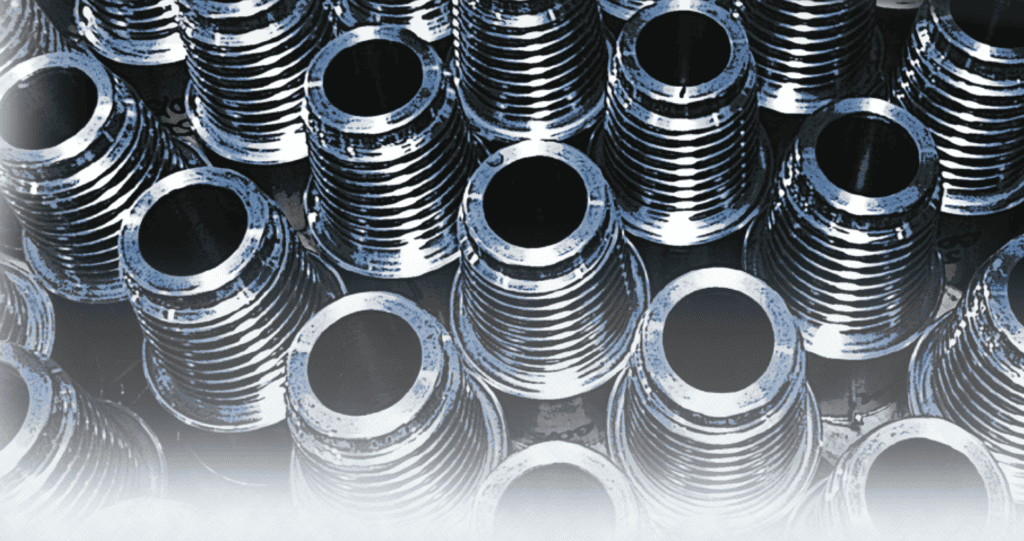
Shear screws are not passive hardware. They are engineered safety mechanisms-precision-manufactured components designed to fail at a specific, predetermined torque threshold in order to protect far more expensive drilling equipment from catastrophic damage. When unexpected pressure or torque conditions occur downhole, the shear screw absorbs the event by breaking intentionally. That controlled failure prevents the kind of uncontrolled failure that damages motor housings, drill collars, MWD tools, and BHA components that cost far more to replace or fish out of a wellbore than the shear screw itself.
The engineering logic is straightforward: a shear screw that breaks at precisely the right threshold is the cheapest insurance policy in the hole. A shear screw that breaks prematurely trips the string and stops production without a cause-level event. A shear screw that fails to break at its rated threshold means the force that was supposed to be absorbed by the screw is instead transferred to more expensive components-exactly the equipment it was designed to protect.
In both failure modes, the result is the same: non-productive time, possible fishing operations, and a per-day cost that has climbed sharply with crude prices in 2026.
Supply Chain Disruption Adds Sourcing Risk
The Hormuz closure has not only elevated crude prices-it has disrupted the broader industrial supply chain in ways that affect component availability across the oil and gas sector. According to the Congressional Research Service's comprehensive analysis of the Hormuz crisis, the closure has disrupted trade flows across multiple commodity categories, including industrial metals, chemical feedstocks, and specialty materials with direct applications in oilfield manufacturing.
For the specific investment and drilling activity responses underway in the Permian Basin, see How the Hormuz Closure Is Driving U.S. Domestic Drilling Investment in 2026.
When a geopolitical event simultaneously spikes crude prices and accelerates domestic drilling activity, it creates a demand surge for precision oilfield components at exactly the moment when some supply chains are under stress. Operators in the Permian Basin and Eagle Ford who are expanding drilling programs in response to $95 WTI are placing more demand on the supply networks that provide shear screws, BHA components, and other downhole hardware. Lead times extend. Allocation decisions get made at the distributor level. Operators with established supplier relationships and stocked specifications hold an advantage over those scrambling to source components on short notice.
The alternative- accepting components with less documented performance history in order to keep programs moving-introduces precisely the kind of risk that the current price environment makes most expensive.
The Domestic Manufacturing Case
The compounding effect of elevated crude prices, accelerated drilling programs, and supply chain disruption from the Hormuz closure builds a clear operational case for domestic precision manufacturing with documented, traceable component specifications.
A shear screw manufactured to 0.0005-inch thread tolerances, with certified material specifications, verified heat treatment, and batch-level documentation, is not functionally interchangeable with a generic substitute—regardless of whether the two components look identical on a dimension sheet. The difference between a known-quantity component and an unknown one is not detectable from the surface. It becomes detectable in the wellbore, at the moment a force event occurs, when the precision of that shear point rating either protects the assembly or fails to do so.
At $65 WTI, the financial difference between those two outcomes was significant. At $95 WTI—with rig day rates climbing, service costs increasing alongside crude prices, and competition for rig time intensifying across active Texas basins—the difference is more significant still. Quality shear screws manufactured to exact specifications have been shown to reduce equipment failure rates by up to 40% compared to generic alternatives, according to operational data documented on Shamrock Precision's service record across four decades of Permian Basin, Eagle Ford, Bakken, and Gulf of America drilling programs.
The Hormuz disruption has fundamentally altered the risk calculation that operators bring to every component sourcing decision. It has raised what failure costs, increased the pace at which equipment is being cycled through demanding operating conditions, and introduced supply chain uncertainty that makes the sourcing relationship itself-not just the component specification-a variable that matters. For Texas operators running active programs in 2026, the case for precision-manufactured domestic components with verified performance documentation is built directly from the economics now prevailing in the market.
Shamrock Precision: Precision-Engineered Shear Screws for Oil & Gas Operations
Since 1981, Shamrock Precision has manufactured precision shear screws for oil and gas operations across the Permian Basin, Eagle Ford, Bakken, and offshore Gulf programs from its Dallas, Texas facility. ISO 9001 and AS9100 certified.
Our Services Include:
- Shear Screws for Oil & Gas - Swiss CNC-machined from 0.125 to 0.875 inch, thread tolerances to 0.0005 inches, available in Inconel, stainless steel, brass, and aluminum. Every batch is documented and tested.
Ready to Discuss Your Specifications? Contact Shamrock Precision to request shear screw specifications or pricing for your 2026 drilling program.
Works Cited
Gore, D'Angelo, et al. "How Iran Blocking the Strait of Hormuz Affects the U.S." FactCheck.org, Annenberg Public Policy Center, www.factcheck.org/2026/03/how-iran-blocking-the-strait-of-hormuz-affects-the-u-s/. Accessed 25 Mar. 2026.
"Iran Conflict and the Strait of Hormuz: Impacts on Oil, Gas, and Other Commodities." Congressional Research Service, Library of Congress, www.congress.gov/crs-product/R45281. Accessed 25 Mar. 2026.
Related Articles
- Strait of Hormuz Closure Sends Shockwaves Through U.S. Oil and Gas Supply Chains
- How the Hormuz Closure Is Driving U.S. Domestic Drilling Investment in 2026