
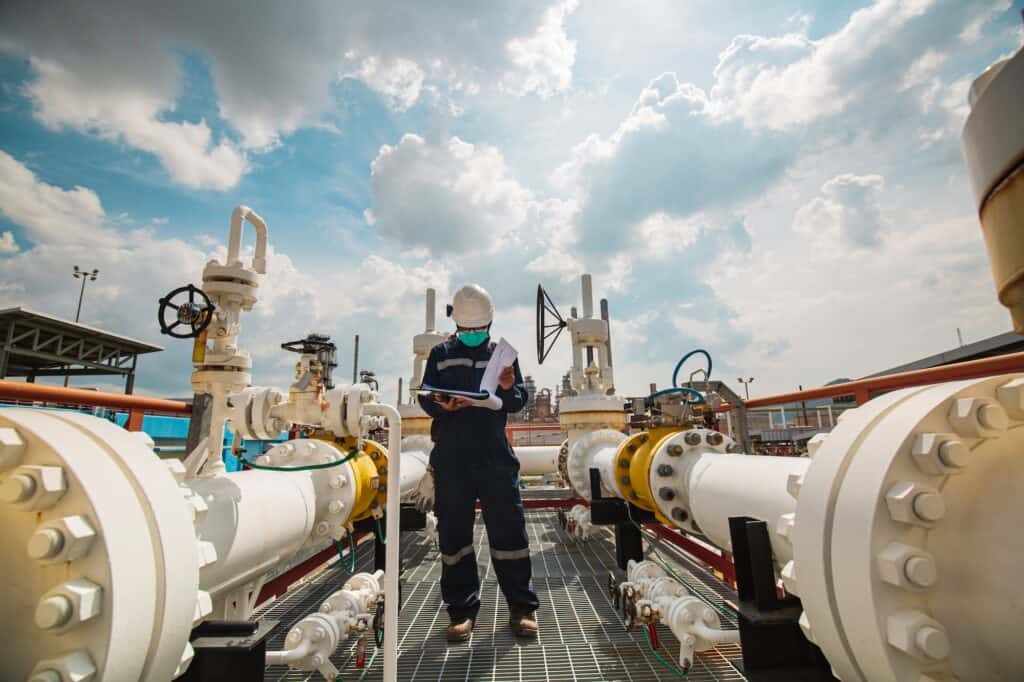
When a critical component leads to drilling equipment failures on a Texas drilling rig, the financial consequences extend far beyond the cost of replacement parts. Lost production, mobilization delays, potential equipment damage, and safety incidents combine to create costs that can reach tens of thousands of dollars per day. In an operating environment where tariffs have squeezed margins, many operators rely on a high-end precision machine shop to ensure efficiency gains that determine competitive survival. Equipment reliability has evolved from an operational preference into a strategic imperative that directly impacts profitability.
The Texas oil and gas industry operates some of the most demanding equipment environments imaginable. Wellhead systems endure extreme pressures, corrosive fluids, and temperature cycling that stress components beyond typical industrial applications. Drilling operations push equipment to design limits while demanding consistent performance across extended campaigns. Completion operations subject tools and assemblies to forces that would destroy lesser equipment in minutes. In these environments, the difference between CNC precision machining and commodity alternatives often determines whether operations proceed smoothly or grind to costly halts.
Understanding the true cost of equipment failures requires examining both direct expenses and the cascading operational impacts that compound initial losses. For Texas operators navigating the tightest margins in years, this understanding has elevated component quality from a procurement consideration to a board-level strategic priority.
The Hidden Costs of Component Failures
The Bureau of Safety and Environmental Enforcement has documented recurring problems with faulty connector bolts in safety-critical equipment deployed in oil and gas operations. Beginning over a decade ago, failures of bolts connecting blowout preventers, risers, and other subsea equipment have raised serious safety and environmental concerns. One incident sequence resulted in the replacement of more than 10,000 bolts across the industry over a relatively short timeframe, disrupting deepwater activities and imposing substantial costs on operators.
The BSEE investigation identified hydrogen-induced stress corrosion cracking as the primary failure mechanism, with bolt coatings that were not processed in accordance with applicable standards contributing to premature degradation. Quality management systems that audited only first-tier suppliers while overlooking subcontractors deeper in the supply chain allowed substandard components to reach critical applications. To prevent this, Texas firms are increasingly seeking out precision machining services that offer full material traceability and rigorous quality audits.
The implications extend beyond offshore operations to every segment of Texas oil and gas activity. Wellhead equipment, Christmas trees, pipeline connections, and drilling assemblies all depend on precision components that must perform reliably under extreme conditions. When these components fail prematurely or behave unpredictably, the consequences range from minor inconveniences to catastrophic incidents that endanger personnel and the environment.
The financial pressures currently reshaping Texas drilling operations amplify the stakes associated with equipment reliability. When examining [Texas Oil Producers Navigate Mounting Pressures as Tariffs and Market Uncertainty Reshape Permian Operations], the connection between component quality and operational economics becomes unmistakable.
Safety Hazards Demand Reliable Equipment
The Occupational Safety and Health Administration has identified numerous safety hazards associated with oil and gas extraction activities, many directly related to equipment performance and reliability. Workers face exposure to rotating wellhead equipment, including top drives, draw works, pumps, compressors, and conveyors, where struck-by and caught-between incidents account for three of every five on-site fatalities. Machine hazards from unguarded or malfunctioning equipment create risks that proper maintenance and quality components can substantially mitigate.
High-pressure lines and equipment present particular hazards when components fail unexpectedly. Internal erosion of lines can result in leaks or bursts that expose workers to high-pressure releases. Connection failures on high-pressure systems create struck-by hazards as unsecured lines whip unpredictably. These scenarios underscore why components designed for high-pressure service must meet exacting specifications without exception.
Shear screws and similar safety devices occupy a critical position in equipment protection strategies. These components are engineered to fail at predetermined load levels, protecting expensive equipment from damage during overload conditions. When drilling equipment encounters unexpected pressure or stress, properly specified shear screws break intentionally to prevent damage to machinery that costs far more to repair or replace. This controlled failure represents cost-effective insurance for drilling operations.
However, this protective function depends entirely on consistent, predictable performance. Shear screws that fail prematurely under normal operating conditions create nuisance interruptions and erode confidence in safety systems. Components that fail to activate at specified thresholds allow excessive forces to reach protected equipment, causing damage that the safety device should have prevented. Utilizing a precision machine shop ensures that manufacturing variations do not create inconsistent failure characteristics across production lots, which could introduce uncertainty into equipment protection strategies.
Quality Manufacturing as Risk Management
The efficiency gains driving Permian Basin production records have intensified demands on equipment reliability. As explored in [Permian Basin Sets Production Records Despite Declining Rig Counts – How Efficiency Gains Are Reshaping Texas Drilling], operators are extracting more production from fewer wells. This operational intensification leaves less margin for error, making CNC precision machining a vital part of the risk management strategy.
This operational intensification leaves less margin for equipment underperformance. When wells cost millions of dollars to drill and complete, and production generates substantial daily revenue once online, any delay becomes extraordinarily expensive. Equipment failures that might have represented minor inconveniences during less intensive operations now create significant financial impacts that ripple through project economics.
The quality imperative extends throughout the supply chain. Raw material selection determines whether components can withstand the corrosive environments and stress cycles inherent in oil and gas applications. Manufacturing processes must maintain dimensional tolerances that ensure proper fit and function in precision assemblies. Heat treatment and surface finishing affect long-term durability and failure characteristics. Quality verification through advanced precision machining services catches defects before components reach the field, where failures prove most costly.
For critical safety components like shear screws, these quality considerations become paramount. Every unit must perform within specified parameters because inconsistent performance defeats the protective purpose these devices serve. Batch documentation enables traceability when questions arise about component performance. Testing protocols confirm that finished products meet design specifications before shipment to customers who depend on reliable performance.
Environmental Conditions Compound Challenges
Texas oil and gas operations subject equipment to environmental stresses that accelerate degradation and increase failure probability. High temperatures common across the Permian Basin affect material properties and can alter failure characteristics of components designed for more moderate conditions. Corrosive fluids encountered during production attack component surfaces, creating stress concentrations that initiate premature failures. Hydrogen sulfide exposure in sour gas applications demands specialized materials that resist embrittlement under conditions that would destroy standard alloys.
Vibration represents another pervasive challenge for equipment reliability. Rotating equipment, reciprocating pumps, and the general activity of drilling operations create continuous vibration exposure that fatigues components over time. Connections loosen, tolerances shift, and stress concentrations develop at locations that experience repeated loading cycles. Components designed without adequate consideration for vibration environments may meet initial specifications while failing prematurely under actual operating conditions.
These environmental factors interact with operational demands to create failure modes that may not appear during laboratory testing or initial deployment. A component that performs adequately for months may fail suddenly when cumulative environmental damage reaches critical thresholds. Understanding these failure mechanisms and designing components to withstand real-world conditions requires the specialized expertise found in a precision machining CNC facility that understands oil and gas applications rather than generic industrial specifications.
The Economics of Quality Investment
When operating margins compress and every cost receives scrutiny, quality investments must demonstrate clear returns to justify their expense. For precision components in oil and gas applications, these returns materialize through reduced failure rates, improved equipment protection, and operational continuity. Beyond direct cost avoidance, components sourced from a reputable precision machine shop contribute to operational confidence that enables aggressive production programs.
The calculation begins with failure costs that quality components help avoid. Daily production losses during equipment downtime, mobilization expenses for repair crews, replacement costs for damaged equipment, and potential regulatory consequences from safety incidents all contribute to the true cost of component failures. When these costs substantially exceed the premium for precision-manufactured alternatives, quality investment becomes straightforward economic decision-making rather than discretionary spending.
Beyond direct cost avoidance, quality components contribute to operational confidence that enables aggressive production programs. Operators who trust their equipment can pursue efficiency gains that more cautious competitors avoid. They can extend maintenance intervals when component reliability supports longer service periods. They can respond quickly to market opportunities without concerns that equipment limitations will constrain execution.
For Texas operators navigating the most challenging conditions in years, this operational confidence represents a competitive advantage that justifies careful attention to component selection and supplier qualification. The companies that emerge strongest will be those who maintained operational excellence by investing in precision machining services, while others cut corners that create problems far exceeding any short-term savings.
Shamrock Precision: Your Partner in Texas Oil and Gas Operations
At Shamrock Precision, we have served Texas oil and gas operations for over four decades with precision-engineered components that deliver reliable performance in the most demanding environments. Our team understands that equipment quality directly impacts your operational success and bottom line.
Our Services Include:
- Shear Screws for Oil and Gas – Precision-manufactured safety components engineered to exact specifications for drilling and completion operations
- Custom Precision Manufacturing – Swiss CNC machining capabilities delivering tolerances to 0.0005 inches for critical applications
Ready to Discuss Your Requirements? Contact Shamrock Precision to learn how our four decades of manufacturing expertise can support your Texas oil and gas operations.
Works Cited
"Bolt and Connector Failures." Bureau of Safety and Environmental Enforcement, U.S. Department of the Interior, www.bsee.gov/what-we-do/offshore-regulatory-programs/emerging-technologies/bolt-and-connector-failures. Accessed 24 Nov. 2025.
"Oil and Gas Extraction – Hazards." Occupational Safety and Health Administration, U.S. Department of Labor, www.osha.gov/oil-and-gas-extraction/hazards. Accessed 24 Nov. 2025.
Related Articles
- [Texas Oil Producers Navigate Mounting Pressures as Tariffs and Market Uncertainty Reshape Permian Operations]
- [Permian Basin Sets Production Records Despite Declining Rig Counts – How Efficiency Gains Are Reshaping Texas Drilling]