

The Permian Basin is defying conventional industry logic in 2025. While rig counts have fallen substantially from their 2022 peaks, crude oil production continues setting records that would have seemed impossible a decade ago. This apparent paradox reflects a fundamental transformation in how Texas operators approach drilling and completion operations, utilizing high-end precision machining to prioritize efficiency and productivity over raw activity levels. The shift carries profound implications for equipment suppliers, service companies, and the broader Texas economy that depends on energy sector vitality.
The numbers tell a compelling story of technological achievement. Despite operating with significantly fewer drilling rigs than peak activity periods, Permian Basin producers pushed U.S. crude oil output to 13.6 million barrels per day in July 2025, establishing a new oil production in the Permian Basin production record. The basin accounts for the overwhelming majority of domestic production growth, cementing its position as the engine driving American energy production even as operators exercise unprecedented capital discipline.
This efficiency revolution represents more than incremental improvement; it is driven by a reimagining of drilling economics where the quality of parts—often sourced from reliable CNC turning services—ensures that every dollar of capital investment is maximized. The transformation offers lessons for energy producers worldwide while creating new demands on equipment quality and component reliability.
The Mathematics of Doing More with Less
Understanding the Permian's productivity miracle requires examining the workforce and operational data that underlies production statistics. According to research published by the U.S. Bureau of Labor Statistics, Texas represents over half of all oil and gas extraction employment nationally, with specialized service companies employing more than two-thirds of industry workers. This concentration of expertise has enabled the technological innovation driving productivity gains across the basin.
The workforce dynamics reveal important patterns. Specialized drilling and completion companies, classified separately from lead exploration and production firms, bear the operational burden of translating technological advances into production results. These service sector workers experience greater employment volatility than their counterparts at major producers, with hiring and separation rates that fluctuate dramatically with activity levels. When drilling slows, the industry relies on specialized providers who offer Swiss machining services to create high-precision, small-diameter downhole components that reduce failures.
Year-over-year productivity improvements across Texas basins demonstrate the scale of efficiency gains. The Permian has achieved productivity increases exceeding 6 percent compared to prior year performance, with similar gains recorded in the Eagle Ford and Haynesville formations. These improvements reflect optimized well designs, advanced completion techniques, and operational refinements that squeeze more production from every foot of lateral drilled.
The cost implications become even more significant when examining how tariffs and market pressures compound operational challenges. Understanding [Texas Oil Producers Navigate Mounting Pressures as Tariffs and Market Uncertainty Reshape Permian Operations] provides essential context for why efficiency gains have become survival imperatives rather than optional enhancements.

Technology Driving the Transformation
The Texas Oil & Gas Association has documented how innovation and technological advancement continue supporting production growth despite reduced drilling activity. Analytics, data visualization, and artificial intelligence applications are enhancing operational efficiencies and boosting resource recoveries across Texas operations. These digital tools enable real-time optimization of drilling parameters, predictive maintenance that prevents costly failures, and completion designs tailored to specific geological conditions.
Longer lateral lengths represent one of the most impactful innovations reshaping Permian economics. Wells that once extended two miles horizontally now routinely reach three miles or more, accessing greater reservoir volumes from single surface locations. This approach reduces the number of wells required to develop a given acreage position while lowering per-barrel finding and development costs. The trade-off involves greater technical complexity and increased stress on downhole equipment, which is why operators are increasingly turning to specialized aerospace machining services to ensure components can withstand these extended intervals.
Completion techniques have evolved in parallel with drilling advances. Simultaneous fracturing operations that stimulate multiple wells concurrently reduce costs by hundreds of thousands of dollars per well while improving operational efficiency. These techniques demand precise coordination and equipment that performs flawlessly under extreme conditions, as failures during complex multi-well operations create cascading delays that erode efficiency gains.
The emphasis on reliability extends throughout the equipment supply chain. This reality elevates the importance of precision manufacturing and quality assurance—specifically, high-tolerance CNC turning services—for every piece of equipment deployed in modern Permian operations. This reality elevates the importance of precision manufacturing and quality assurance for every piece of equipment deployed in modern Permian operations.
Capital Discipline Reshapes Operator Behavior
The efficiency transformation reflects deliberate strategic choices rather than accidental outcomes. Major Permian operators have explicitly prioritized returns over production growth, implementing capital discipline frameworks that evaluate every drilling decision against strict profitability criteria. This approach marks a departure from the growth-at-any-cost mentality that characterized earlier shale development phases and created financial stress across the industry.
Capital discipline manifests in multiple operational decisions. Operators' high-grade drilling programs to focus on the most productive acreage positions. They defer marginal projects that might have proceeded during higher price environments. They negotiate aggressively with service providers to capture cost reductions that preserve margins. And they invest selectively in technologies that demonstrably improve returns rather than chasing every innovation that promises incremental gains.
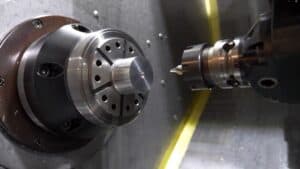
The implications for equipment suppliers are significant. Operators exercising capital discipline scrutinize every purchase decision, demanding documentation of value delivered and holding suppliers accountable for quality. While commodity components face intense price pressure, precision-engineered parts—manufactured using advanced CNC milling services—command premium positioning because they deliver measurable operational benefits despite tighter overall budgets. Commodity components that merely meet minimum specifications face intense price pressure, while precision-engineered equipment that delivers measurable operational benefits commands premium positioning despite tighter overall budgets.
Production Sustainability Questions Emerge
Despite impressive productivity gains, questions about long-term sustainability are emerging across the industry. The drilled but uncompleted well inventory has declined substantially, reducing operational flexibility and raising questions about the oil production in the Permian Basin trajectory once existing wells begin their natural decline. This inventory depletion reduces operational flexibility and raises questions about oil production in the Permian Basin trajectory once existing wells begin their natural decline curves.
Industry analysts note that efficiency gains, while remarkable, cannot continue indefinitely at historical rates. The low-hanging fruit of operational improvement has largely been harvested, and future productivity increases will require continued innovation and investment. If capital constraints prevent necessary technology development, the production miracle currently underway could stall or reverse.
Water management represents another emerging constraint on Permian activity. Produced water volumes have increased alongside production, creating disposal challenges that add costs and regulatory complexity. Some survey respondents expect water management issues to constrain drilling and completion activity within the next five years, potentially limiting production growth regardless of commodity price environments.
These sustainability concerns amplify the importance of operational excellence at every level. When equipment failures compound already challenging conditions, the cumulative impact on project economics can push marginal wells below viability thresholds. Understanding [Equipment Failures Cost Texas Drilling Operations Millions – The Critical Role of Precision Safety Components] illuminates why component quality has become a strategic priority for operators navigating constrained environments.
Implications for Texas Energy Economy
The efficiency transformation reshaping Permian operations carries broader implications for Texas communities and the state economy. While record production levels support royalty payments, tax revenues, and downstream processing activity, reduced drilling intensity means fewer jobs in the field and less spending in oilfield service communities. This divergence between production volumes and employment levels creates economic dislocations that policy makers and community leaders must address.
The concentration of productivity gains among larger, more technically sophisticated operators also raises questions about industry structure. Smaller independents who lack resources to implement advanced technologies or negotiate favorable service contracts face increasing competitive disadvantages. Consolidation trends that have already reshaped the Permian may accelerate as efficiency gaps widen between industry leaders and lagging participants.
For equipment suppliers, the efficiency imperative creates both challenges and opportunities. Companies that help operators achieve productivity gains through reliable aerospace machining services and high-performance CNC turning services can capture value even in constrained spending environments.
Shamrock Precision: Your Partner in Texas Oil and Gas Operations
At Shamrock Precision, we have served Texas oil and gas operations for over four decades with precision-engineered components that deliver reliable performance in the most demanding environments. Our team understands that equipment quality directly impacts your operational success and bottom line.
Our Services Include:
- Shear Screws for Oil and Gas – Precision-manufactured safety components engineered to exact specifications for drilling and completion operations
- Custom Precision Manufacturing – Swiss CNC machining capabilities delivering tolerances to 0.0005 inches for critical applications
Ready to Discuss Your Requirements? Contact Shamrock Precision to learn how our four decades of manufacturing expertise can support your Texas oil and gas operations.
Works Cited
"Describing the U.S. Oil and Gas Extraction Workforce with Public Data." Monthly Labor Review, U.S. Bureau of Labor Statistics, 2025, www.bls.gov/opub/mlr/2025/article/describing-the-us-oil-and-gas-extraction-workforce-with-public-data.htm. Accessed 24 Nov. 2025.
"Q2 2025: Navigating Uncertainty and Divergence in the Global Outlook." Texas Oil & Gas Association, 3 June 2025, www.txoga.org/q2-2025-navigating-uncertainty-and-divergence-in-the-global-outlook/. Accessed 24 Nov. 2025.
Related Articles
- [Texas Oil Producers Navigate Mounting Pressures as Tariffs and Market Uncertainty Reshape Permian Operations]
- [Equipment Failures Cost Texas Drilling Operations Millions – The Critical Role of Precision Safety Components]