

Integrating AI And CNC Precision To Transform The Future Of Oil & Gas Operations
The oil and gas industry stands at a technological crossroads in 2025, with artificial intelligence (AI) rapidly emerging as the defining force reshaping operations from wellhead to distribution. As companies navigate market volatility and escalating demands for operational efficiency, AI solutions paired with precision machining and engineered components create powerful synergies that drive innovation, safety, and profitability.
This digital renaissance transforms not just how energy companies manage data, but how AI energy manufacturing redefines how critical equipment functions in the field.
For industry leaders like Shamrock Precision, manufacturers of specialized components such as shear screws, this technological shift creates new opportunities to integrate precision engineering with intelligent systems, enhancing safety and reliability in an automated industry.
The AI Transformation Across the Oil & Gas Value Chain
The adoption of artificial intelligence in oil and gas has accelerated dramatically, with market value projected to reach $3.3 billion by 2026. From exploration and production to midstream operations and distribution, intelligent technologies are revolutionizing how companies extract value from both their data and physical assets.
Exploration and Reservoir Management
Geological assessment has historically been an inexact science, with substantial financial risks attached to drilling decisions. Today, AI algorithms analyze vast seismic and electromagnetic datasets with unprecedented accuracy, dramatically improving hydrocarbon discovery rates.
According to Hart Energy, companies using neural networks to identify subsurface faults in 3D seismic images have achieved remarkable results, with AI models capable of processing in minutes what would take human experts weeks to analyze. These systems learn from expert input, then apply that knowledge consistently across enormous datasets.
For equipment manufacturers like Shamrock Precision, this transformation means drilling components must meet exacting standards to function reliably in targeted operations. To maintain these standards across the supply chain, companies often rely on comprehensive outside process management services to ensure that specialized coatings and heat treatments are applied with the same precision as the initial machining.
Predictive Maintenance and Asset Optimization
Perhaps the most transformative application of AI in oil and gas operations involves predictive maintenance - using machine learning to anticipate equipment failures before they occur. This approach shifts maintenance from reactive to proactive, dramatically reducing downtime and extending asset lifespans.
AI systems identify subtle patterns preceding component failures. The precision components manufactured by Shamrock Precision, including our custom shear pins, play a crucial role here. Our screws, manufactured to tolerances as precise as 0.0005 inches through our exacting quality standards, provide reliable mechanical protection. When integrated with AI monitoring, they become part of an intelligent safety framework.
The precision components manufactured by Shamrock Precision play a crucial role in this new maintenance paradigm. Their shear screws, manufactured to tolerances as precise as 0.0005 inches, provide reliable mechanical protection in high-stress environments. When integrated with AI monitoring systems, these components become part of an intelligent safety framework that protects both equipment and personnel.
Production Optimization
Production optimization represents another domain where AI delivers substantial value. Smart algorithms continuously analyze production parameters, identifying opportunities to increase output or reduce costs without compromising safety or equipment integrity.
According to a 2025 AI in Oil & Gas Conference preview, "AI optimizes production and maintenance in older fields, balances operations across different time horizons, and helps solve knowledge management challenges for a rapidly evolving workforce."
For mature wells entering decline phases, these systems extract maximum value through precise calibration of operating parameters. When combined with high-quality mechanical components like those manufactured by Shamrock Precision, AI-optimized production systems deliver exceptional performance even as reservoirs age.
The Critical Intersection of AI and Precision Components
The success of AI applications in oil and gas depends critically on the quality of the physical components that make up drilling, production, and processing systems. As operations become more automated and data-driven, the reliability of mechanical safeguards becomes even more fundamental.
Mechanical Fuses in Intelligent Systems
Shamrock Precision's multi-stage production methodology exemplifies the attention to detail required for components used in AI-enhanced operations:
-
Material Selection: Choosing optimal alloys based on application requirements.
-
CNC Programming: Creating precise digital blueprints.
-
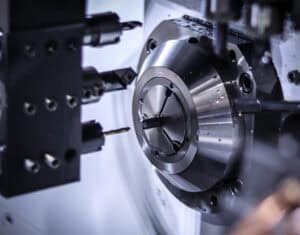
Advanced Machining: Using Swiss machining — Swiss-type lathes for accurate cutting and micron-level precision.
-
Specialized Finishing: Utilizing expert outside process management services for environmental protection.
-
Quality Control: Conducting thorough precision testing and inspections.
Manufacturing Excellence Supporting AI Innovation
Shamrock Precision's manufacturing processes exemplify the attention to detail required for components used in AI-enhanced operations. Our multi-stage production methodology includes:
- Material Selection: Choosing optimal metal alloys based on application requirements
- CNC Programming: Creating precise digital blueprints for manufacturing
- CNC Turning: Using advanced Swiss-type CNC lathes for accurate cutting and threading
- Heat Treatment: Applying specialized heating processes for optimal strength
- Surface Finishing: Providing appropriate coatings for environmental protection
- Quality Control: Conducting thorough precision testing and precision inspections at every production stage.
This manufacturing excellence, backed by ISO 9001 and AS9100 certifications, along with ITAR compliance, guarantees component reliability in the most demanding AI-monitored operations.
Five Key AI Applications Transforming Oil & Gas Operations
1. Intelligent Seismic Interpretation
AI algorithms now analyze seismic data with greater accuracy than human experts, identifying potential drilling locations with remarkable precision. These systems learn from vast datasets of past exploration results, recognizing subtle patterns that indicate hydrocarbon deposits.
According to research from StartUs Insights, "AI in oil and gas exploration reduces the likelihood of costly surprises" by improving seismic image interpretation and identifying optimal drilling locations.
For component manufacturers like Shamrock Precision, this shift toward data-driven exploration creates demand for drilling equipment components that can withstand the precise, targeted operations. Our precision-engineered shear screws protect valuable downhole tools during these operations, ensuring reliability in remote locations. Their shear screws protect valuable downhole tools during these operations, ensuring equipment reliability in remote or offshore locations.
2. AI-Powered Predictive Maintenance
Unplanned downtime costs oil and gas companies billions annually. AI-driven predictive maintenance identifies potential failures days or weeks before they occur, allowing for scheduled repairs that minimize production disruption.
These systems monitor thousands of parameters across production facilities, learning the normal operating patterns of equipment and identifying anomalies that precede failures. According to industry analysts, predictive maintenance can reduce equipment downtime by 30-50% and extend machinery life by years.
The mechanical components manufactured by Shamrock Precision complement these AI monitoring systems by providing physical safeguards. Our engineered mechanical fuses break at carefully calibrated thresholds, providing a fail-safe that has passed rigorous industrial precision testing. Their precision-engineered shear screws break at carefully calibrated thresholds, preventing catastrophic damage to expensive equipment.
3. Autonomous Drilling Operations
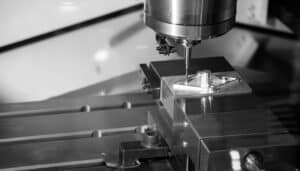
Autonomous drilling represents one of the most ambitious applications of AI in oil and gas, combining robotics, machine learning, and advanced analytics to create self-optimizing drilling systems. These platforms continuously adjust drilling parameters based on real-time data from downhole sensors, maximizing penetration rates and minimizing equipment wear — the same precision demanded in CNC milling operations where cutting parameters directly determine surface quality and part accuracy.
For these systems to function safely, they require both sophisticated control algorithms and reliable mechanical safeguards. The custom shear pins manufactured at our facility provide crucial protection, breaking at predetermined thresholds to prevent damage during unexpected conditions.
4. Supply Chain Optimization
AI algorithms now manage complex oil and gas supply chains, optimizing everything from inventory levels to transportation logistics. For specialized manufacturers, this requires a seamless outside process management strategy to ensure that every part of the production cycle—from raw material to final coating—is tracked and optimized for global delivery.
For specialized component manufacturers like Shamrock Precision, AI-optimized supply chains create new opportunities to serve global markets efficiently. Their manufacturing expertise allows them to produce critical components like shear screws to exact specifications, supporting oil and gas operations worldwide from their Texas headquarters.
5. Digital Twins and Simulation
Digital twin technology creates virtual replicas of physical assets, allowing operators to simulate different operating conditions and optimize performance without risking actual equipment. These models continuously update based on real-time data from the physical asset, providing an accurate representation of current conditions.
For maximum effectiveness, digital twins must accurately model both the electronic and mechanical aspects. The performance characteristics of our parts, verified through precision testing, are precisely modeled in these simulations to provide accurate predictive capabilities. The performance characteristics of components like Shamrock Precision's shear screws must be precisely represented in these simulations to provide accurate predictive capabilities.
The Human-AI Partnership in Modern Operations
Despite the transformative potential of AI in oil and gas, human expertise remains fundamental to successful operations. As Vidar Gunnerud, CEO of Solution Seeker, told Hart Energy, "Our approach is not necessarily to remove the human all the way... in the decision loop that runs a few times a day, you could afford to put the human in the loop, particularly in settings where there are big impacts regarding the decisions."
This collaborative approach, where AI augments rather than replaces human decision-making, creates a powerful partnership that leverages the strengths of both. AI excels at processing vast amounts of data and identifying patterns, but human expertise provides contextual understanding and judgment that algorithms cannot yet match.
For manufacturers of critical components like Shamrock Precision, this human-AI partnership extends to the manufacturing process itself. While advanced CNC machinery produces shear screws with remarkable precision, human expertise in material selection, quality control, and application engineering remains irreplaceable.
Challenges and Opportunities in AI Adoption
Despite its transformative potential, AI adoption in oil and gas faces significant challenges. Legacy systems, data quality issues, and organizational resistance can all impede the implementation of intelligent technologies.
According to industry experts, one of the biggest challenges involves connecting siloed data systems to create the comprehensive datasets that AI requires. Many oil and gas operations have accumulated decades of operational data spread across incompatible systems, making integration difficult.
Security concerns also present challenges, particularly for operations in remote locations or on offshore platforms. AI systems that control critical infrastructure must be protected against both cyber attacks and data corruption that could lead to equipment damage or safety incidents.
For component manufacturers like Shamrock Precision, these challenges create opportunities to provide mechanical safeguards that function independently of digital systems. Their shear screws provide reliable protection regardless of network connectivity or data quality, creating an essential backup to AI-controlled operations. To ensure these backups are ready for the field, we utilize comprehensive outside process management services to handle complex finishing requirements.
The Path Forward: Integration and Innovation
The future of oil and gas operations lies in the thoughtful integration of artificial intelligence with high-quality physical components. Neither advanced algorithms nor precision engineering alone can address the complex challenges facing the industry. Together, they create resilient, efficient systems capable of operating in the most demanding environments — from oil field drilling to aerospace machining applications where failure is never an option.
For Shamrock Precision, this integration represents both a challenge and an opportunity. Their four decades of manufacturing expertise provide a strong foundation for supporting AI-enhanced operations with reliable mechanical components. As the industry continues to evolve, their commitment to quality and precision positions them as valued partners in the intelligent operations of tomorrow.
Final Thoughts: Excellence in Both Digital and Physical Domains
The oil and gas industry of 2025 demands excellence in both digital technologies and physical components. AI algorithms may optimize operations, but precision-engineered parts like those manufactured by Shamrock Precision make those operations possible. By combining advanced precision testing with intelligent design, Shamrock Precision remains a valued partner in the energy evolution.
For companies navigating this transformation, partnerships with experienced manufacturers become increasingly valuable. Their domain knowledge and manufacturing capabilities provide the reliable mechanical foundation upon which intelligent systems can be built.
The revolution in oil and gas operations has just begun. As AI technologies mature and integration challenges are overcome, the industry will achieve levels of efficiency, safety, and sustainability that were previously impossible. Companies that embrace this transformation—investing in both digital intelligence and physical excellence—will lead the industry into its next chapter.
Frequently Asked Questions About AI in Oil & Gas
How is artificial intelligence changing exploration and production in oil and gas?
Precision components like engineered shear fasteners provide critical mechanical safeguards. AI transforms exploration and production through advanced seismic interpretation, identifying potential drilling locations with unprecedented accuracy by analyzing patterns in geological data. Machine learning algorithms process vast datasets from past exploration efforts, recognizing subtle indicators of hydrocarbon deposits that human experts might miss. During production, AI optimizes well performance by continuously analyzing operating parameters and recommending adjustments to maximize output and minimize costs. Companies using these technologies report significant improvements in drilling success rates and production efficiency, with corresponding reductions in exploration risk and operating costs.
What role do precision components play in AI-enhanced oil and gas operations?
Precision components like Shamrock Precision's shear screws provide critical mechanical safeguards in automated operations, protecting valuable equipment when digital systems cannot respond quickly enough to prevent damage. These components function as mechanical fuses, breaking at predetermined thresholds to protect more expensive equipment from excessive force or pressure. As AI systems take greater control of operations, the reliability of these mechanical safeguards becomes even more crucial. The manufacturing precision achieved by companies like Shamrock, with tolerances as tight as 0.0005 inches, creates components that perform consistently under the demanding conditions of modern oil and gas operations.
How does predictive maintenance using AI benefit oil and gas companies?
Predictive maintenance using AI delivers substantial benefits by identifying potential equipment failures before they occur, allowing maintenance to be performed during scheduled downtime rather than during emergency shutdowns. Machine learning algorithms analyze data from thousands of sensors monitoring equipment performance, identifying subtle patterns that precede component failures. This approach reduces unplanned downtime by 30-50%, extends equipment life, and significantly lowers maintenance costs. When paired with components that have undergone rigorous precision testing, these systems create a comprehensive safety net for valuable assets.
What challenges do oil and gas companies face when implementing AI technologies?
Oil and gas companies implementing AI face challenges, including data integration across siloed systems, data quality issues from legacy equipment, and cybersecurity concerns for remotely operated facilities. Many operations have accumulated decades of operational data in incompatible formats, making it difficult to create the comprehensive datasets that AI requires for effective learning. Training staff to work effectively with AI systems presents another challenge, requiring significant investment in both technical education and change management. Companies like Shamrock Precision support this transition by providing reliable mechanical components that function effectively regardless of digital system status, creating backups for AI-controlled operations.
How will AI and precision manufacturing evolve together in the future of oil and gas?
AI and precision manufacturing will evolve toward deeper integration, with digital design systems directly informing component specifications based on operational data and performance requirements. Machine learning algorithms will analyze equipment performance across thousands of installations, identifying opportunities to improve component designs for specific operating conditions. Manufacturers like Shamrock Precision will incorporate these insights into their production processes, creating components optimized for AI-controlled operations. This collaborative evolution will produce oil and gas systems with unprecedented levels of efficiency, reliability, and safety, capable of operating in environments that would be impossible for humans or machines alone.