
Shamrock Precision | Precision Manufacturing for Texas Oil and Gas Since 1981
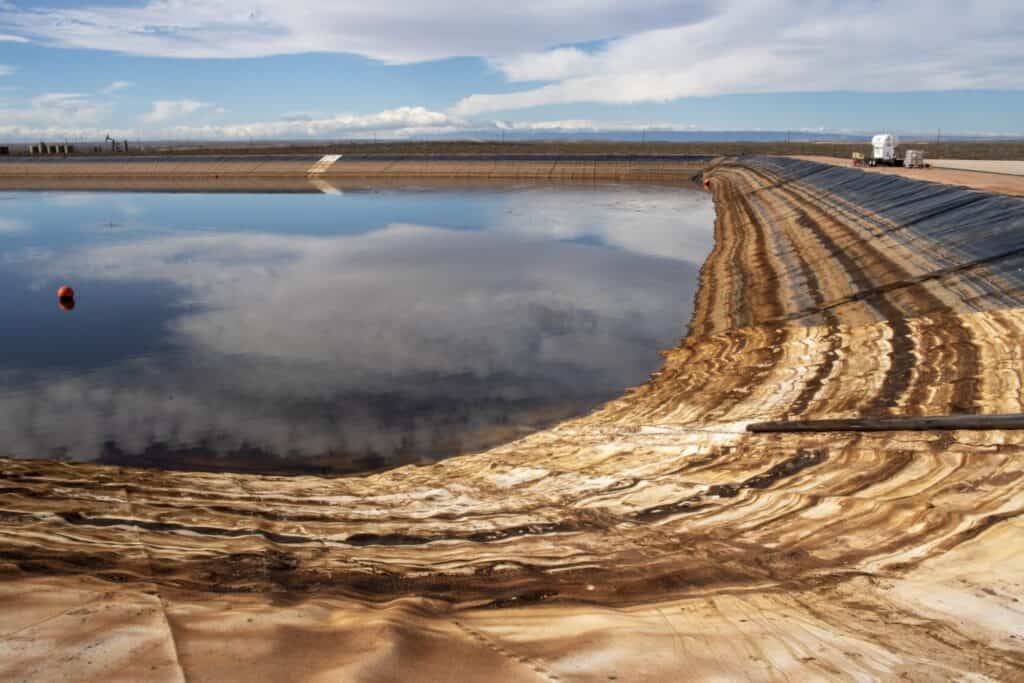
The Permian Basin's production record hides a second, far less celebrated record. In 2024, the basin produced more than 20 million barrels of toxic, chemically laced produced water every single day — a saltwater-and-chemical-laden byproduct of hydraulic fracturing that operators must dispose of safely, continuously, and at enormous cost. That volume is projected to reach 26 million barrels per day by 2030 as production grows and drilling shifts to formations with higher water-to-oil ratios. For years, the industry managed this problem quietly and largely out of public view, treating it as an operational line item rather than an existential challenge. That changed in 2025. The Railroad Commission of Texas acknowledged publicly that produced water disposal had created widespread underground pressure problems threatening freshwater resources, mineral rights, and production operations across the basin's most prolific zones. The regulatory response that followed is now reshaping drilling economics throughout the region in ways that will define the Permian's next chapter.
The Scale of What Comes Out of the Ground
To understand the produced water crisis, the math has to come first. For every barrel of crude the Permian produces, hydraulic fracturing operations pull three to five barrels of produced water to the surface along with it. At 6.5 million barrels of oil per day, that ratio generates between 19.5 million and 32.5 million barrels of wastewater daily — a volume that dwarfs the daily water consumption of most American cities and must be handled, transported, and disposed of in an arid West Texas landscape with limited natural water management infrastructure.
The U.S. Geological Survey has studied water use associated with continuous oil and gas development in the Permian Basin extensively, documenting the enormous volumes required for hydraulic fracturing operations and the growing complexity of produced water management as production scales (USGS Fact Sheet 2021-3053). The USGS research established that Permian water use in oil and gas development grew dramatically through the 2010s alongside production increases, creating a disposal challenge that expanded in direct proportion to the shale revolution's success. The deeper and more water-intensive formations operators are now moving into will push those volumes higher still.
The standard disposal method — injecting wastewater deep underground into saltwater disposal wells — worked during the early years of the shale boom when volumes were manageable and disposal capacity was abundant. That era is over. Operators have now pumped so much fluid underground across the Permian that shallow disposal reservoirs throughout the basin are becoming critically overpressurized, exerting force on thousands of oil wells drilled over the past century and creating pathways for toxic fluid to migrate where it should not go.
Earthquakes, Blowouts, and the Regulatory Reckoning
The consequences of overpressurized disposal zones have been accumulating for years. Seismic activity in the Permian region was essentially absent before the shale boom — researchers recorded just 19 earthquakes of magnitude 1.0 or above near Pecos, Texas in 2009. By 2017, that figure had risen to more than 1,600 events as deep injection operations pressurized fault systems that had been dormant for millennia. In response, regulators restricted deep injection, pushing operators toward shallower disposal zones. That shift solved the earthquake problem in some areas while creating a new one: blowouts.
Wells drilled and plugged across the Permian over the past century were cemented using standards that predate modern engineering requirements. As shallow disposal zones fill with injected wastewater, rising underground pressure is finding those old plugs and breaching them. The result is geyser-like surface blowouts where toxic produced water erupts through abandoned wellbores, contaminating land and threatening freshwater aquifers that millions of Texans depend on for drinking water. Field investigators have documented blowouts shooting produced water more than 100 feet into the air in West Texas locations where the problem has been allowed to compound without intervention.
In May 2025, the Railroad Commission of Texas crossed a significant threshold: it formally acknowledged that disposal into the Delaware Mountain Group formation had resulted in widespread underground pressure increases that may not be in the public interest and may harm mineral and freshwater resources across Texas. The Commission issued new guidelines effective June 2025 limiting injection pressure levels and requiring operators to assess every unplugged well within a half-mile radius of disposal sites — double the previous required distance. Chevron, BP, Coterra Energy, Waterbridge Operating LLC, and NGL Energy Partners were among the companies receiving formal compliance notices. Coterra's situation was the most immediate: the company was forced to halt oil production in Culberson County after waste fluids leaked directly into active producing wells, a clear demonstration that the water management problem had moved from an environmental concern to an operational production crisis.
The broader economic assessment of the current environment — including price pressure, tariff impacts, and drilling economics — is covered in Texas Oil and Gas: The Industry's Defining Challenges Yesterday, Today, and Tomorrow, which contextualizes where produced water costs fit within the full spectrum of pressures facing Permian operators.
What Water Costs Are Doing to Drilling Math
The financial impact of the new disposal restrictions is working through Permian economics in real time. Analysts estimate that escalating produced water disposal costs could add approximately $6 per barrel to Permian breakeven prices — a critical figure when WTI trades at $65 and the basin's previous breakeven was $62 to $64. That single cost increase can push marginal wells from profitable to uneconomical, particularly in the Delaware sub-basin where water-to-oil ratios are highest and disposal infrastructure is most constrained.
The Dallas Fed Q2 2025 Energy Survey found that 74% of Texas oil and gas executives expect produced water management challenges to constrain Permian drilling and completion activity over the coming five years, with 32% anticipating significant constraints. Smaller operators face the steepest exposure. Large integrated companies can invest in water recycling infrastructure, negotiate long-haul disposal contracts to regions with available capacity, and spread the fixed costs of water management across large production volumes. Independent operators drilling fewer wells with tighter capital budgets have fewer options and absorb the cost increases more directly on a per-barrel basis.
Recycling produced water for reuse in future fracking operations is the industry's most promising long-term solution, and adoption is growing. But treating produced water to the standards required for reuse costs between $2.55 and $10 per barrel — compared to less than $1 for conventional disposal when that option was fully available. That cost gap makes widespread adoption economically challenging without meaningful technology improvements, and the gap narrows only as disposal alternatives become more constrained and expensive, not because recycling itself has become cheap.
The Well Integrity Dimension
The produced water crisis has surfaced an older, quieter problem that was easy to ignore when underground pressures were lower: aging well infrastructure throughout the Permian. Thousands of wells drilled and plugged across the basin over the past hundred years were sealed using methods and materials that did not anticipate the pressure loads now being imposed on them by modern disposal operations. Each compromised plug represents a potential pathway to the surface for toxic produced water, and the scale of that legacy infrastructure — tens of thousands of wells across a region the size of a small country — makes systematic remediation both technically complex and enormously expensive.
Operating in that environment places a premium on every downhole component performing exactly as designed under conditions that are increasingly unpredictable. Pressure events that old wellbores allow to propagate can stress equipment throughout an active well system. The precision engineering requirements for components operating in these environments — including shear screws that must protect expensive drilling equipment from unexpected pressure surges — become more critical, not less, as subsurface conditions grow more complex. The Downtime Crisis in Texas Oilfields: What Equipment Failure Actually Costs Operators examines how component reliability translates directly to operational and financial outcomes when conditions underground are deteriorating.
The USGS has confirmed that the Permian's resource future remains extraordinary: estimated undiscovered technically recoverable resources in the basin include 46.3 billion barrels of oil and 281 trillion cubic feet of gas in the Wolfcamp and Bone Spring formations alone, according to USGS assessments. But extracting those resources will require solving the produced water problem, not deferring it. The companies best positioned for the Permian's next phase will be those that address water management proactively, invest in operational precision at every level of the well system, and build supply chains capable of delivering reliable components to a basin operating under increasing technical and regulatory complexity.
Shamrock Precision: Components That Hold When Conditions Don't
Shamrock Precision has manufactured precision components for the Texas oil and gas industry since 1981. When wellbore conditions grow unpredictable — as the produced water crisis increasingly demonstrates they can — the reliability of every downhole component becomes a direct operational variable that shows up in production results.
Our Services Include:
- Shear Screws for Oil and Gas — precision safety components engineered to protect drilling equipment in the extreme pressure, temperature, and chemical environments of Permian Basin operations, manufactured to tolerances of 0.0005 inches in Inconel, stainless steel, brass, and aluminum
- Machining Capabilities — ISO 9001 and AS9100 certified Swiss CNC machining, milling, turning, and inspection services for oil and gas applications
Contact Shamrock Precision to discuss component requirements for your drilling, completion, and well servicing operations.
Works Cited
Houston, N.A., and others. "Estimates of Water Use Associated with Continuous Oil and Gas Development in the Permian Basin, Texas and New Mexico, 2010–19." U.S. Geological Survey Fact Sheet 2021–3053, pubs.usgs.gov/publication/fs20213053. Accessed 26 Feb. 2026.
"Permian Basin Oil and Gas Assessments." U.S. Geological Survey, U.S. Department of the Interior, www.usgs.gov/centers/central-energy-resources-science-center/science/permian-basin-oil-and-gas-assessments. Accessed 26 Feb. 2026.
Related Articles
- Texas Oil and Gas: The Industry's Defining Challenges Yesterday, Today, and Tomorrow
- The Downtime Crisis in Texas Oilfields: What Equipment Failure Actually Costs Operators