

Precision machining is one of those terms that gets used a lot in manufacturing circles, but what does it actually mean, and why does it matter so much? Whether you're an engineer sourcing a vendor, a student entering the trades, or a buyer trying to understand what you're paying for, this guide breaks it all down in plain language. We cover the definition of precision machining, the key processes involved, the industries that depend on it, and what separates good machining from great machining.
Precision machining is a critical manufacturing process that uses advanced machinery and techniques to produce parts with extremely fine tolerances. As a premier precision machine shop, Shamrock Precision provides this comprehensive guide to explore the various aspects of precision machining, from the basic techniques and tools used to the future trends and sustainability considerations. It provides valuable insights into what precision machining is, how it impacts critical industries, and the essential skills required for machinists.
Key Takeaways
- Precision machining is essential for creating complex components with high accuracy in industries like aerospace, medical, and automotive.
- Advanced CNC technology is central to precision machining, offering enhanced precision, efficiency, and repeatability.
- Material selection is crucial, as different materials affect the machinability and final properties of the components.
- Future trends in precision machining include technological advancements, integration with automation, and sustainability efforts.
- Training and continuous education are vital for machinists to keep up with the evolving technologies and techniques in precision machining.
What Is Precision Machining?
Precision machining is a subtractive manufacturing process in which material is carefully removed from a raw workpiece, typically metal, plastic, or composite, until the part reaches its exact required dimensions. The defining characteristic is extreme dimensional accuracy, often measured in thousandths of an inch (or microns in metric terms).
A straightforward precision machining definition: it is the process of shaping materials to very tight tolerances using computer-controlled or manually operated cutting tools, where the allowable margin of error can be as small as ±0.0001 inches, roughly the width of a human hair divided by ten.
Precision machining's meaning goes beyond just "accurate cutting." It encompasses the entire workflow: material selection, tool selection, machine setup, cutting strategy, quality inspection, and post-machining finishing. Every step has to be right for the final part to meet the specification.
This process is fundamental in creating intricate parts and components that are essential in various industries, including aerospace, automotive, and medical devices. To ensure these tolerances are met, we utilize advanced precision inspection services to verify every dimension.
Exploring The Basics Of Precision CNC Machining
Precision machining is a manufacturing process that creates highly accurate and complex parts using cutting tools and advanced machinery. This article delves into the fundamentals of precision machining, explaining key concepts, techniques, and applications. Gain a solid understanding of how precision machining works and its significance in various industries.
Definition and Scope
Precision machining is a critical manufacturing process that involves the removal of material from a workpiece to achieve the desired dimensions and tolerances with high accuracy. This process is fundamental in creating intricate parts and components that are essential in various industries, including aerospace, automotive, and medical devices. To ensure these tolerances are met, we utilize advanced precision inspection services to verify every dimension.
Core Techniques and Tools
The core techniques of precision machining include CNC milling, CNC turning, drilling, and grinding. Each technique plays a vital role in shaping the final product:
- CNC milling involves the use of computer-controlled rotary cutters to remove material.
- CNC turning uses a lathe to rotate the workpiece against a cutting tool.
- Drilling creates holes in the material, while grinding smoothens surfaces.
Importance in Modern Manufacturing
Precision machining is indispensable in modern manufacturing due to its ability to produce high-quality, complex parts with excellent finishes. The precision and versatility provided by advanced machining techniques are crucial for meeting the stringent requirements of today's technologically advanced products.
To put it concretely: a commercial aircraft contains thousands of individually machined components. If even one part is off by a fraction of a millimeter, it can cause assembly failure, or worse. Precision machining is what makes reliable, repeatable, high-performance manufacturing possible at scale.
Key Techniques in CNC Precision Machining
Precision machining involves a variety of techniques that are crucial for achieving the desired accuracy and detail in manufacturing. Each technique utilizes advanced machining technology and is integral to modern production processes.
CNC Milling
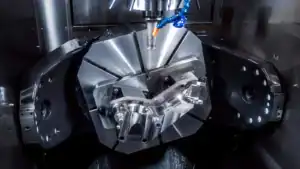
CNC Milling is a process where rotating cutting tools are used to remove material from a workpiece, shaping it to the required dimensions and surface quality. This method is highly versatile and can handle complex geometries.
In CNC milling, the cutting tool spins at high speed while the workpiece remains stationary (or moves along programmed axes). Modern 5-axis CNC milling centers can approach a workpiece from nearly any angle in a single setup, dramatically reducing the time and cost of producing complex parts. For anything with contoured surfaces, slots, pockets, or compound angles, precision CNC milling is usually the go-to process.
CNC Turning
In CNC Turning, the workpiece itself rotates while a cutting tool moves in a linear fashion. This technique is essential for creating cylindrical parts and works with a wide range of materials.
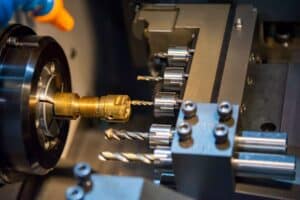
CNC turning is the preferred method for producing shafts, bushings, pins, and threaded components. Swiss-style CNC turning takes this further — it excels at producing extremely small, tight-tolerance parts (sometimes under 1mm in diameter) used in medical devices and precision instruments. The level of control available in modern CNC turning makes it one of the most reliable processes in the precision machining industry.
Drilling and Grinding
Drilling involves creating holes in the material using a rotating drill bit, while grinding uses an abrasive wheel to finish surfaces and sharpen edges. Both processes are vital for adding the finishing touches to parts and ensuring they fit precise specifications.
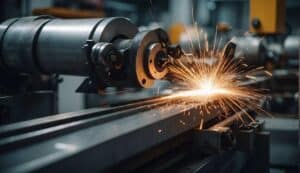
High precision grinding and machining often go hand in hand. Precision grinding is frequently the final step in producing parts that must hit the tightest tolerances; it can achieve surface finishes measured in microinches (Ra values of 4–8 µin), a smoothness that most other machining processes simply cannot reach. When a part needs a mirror finish or must mate perfectly with another component under load, grinding is what delivers that result.
Materials and Their Impact on Precision Machining
The choice of material plays a crucial role in precision machining. Different materials have unique properties that affect machinability, tool life, and part quality. This article explores common materials used in precision machining, such as metals, plastics, and composites, and discusses their characteristics, advantages, and challenges.
Choosing the Right Material
Selecting the appropriate material is crucial for achieving the desired outcomes in precision machining. After machining, we often perform precision testing to ensure the material integrity remains intact after the removal process. Factors to consider include the material's machinability, strength, and thermal properties.
There is no universal "best" material in precision machining; the right choice depends entirely on the application. A surgical implant needs biocompatibility above everything else. An aerospace bracket needs a high strength-to-weight ratio. A heat exchanger component must handle thermal cycling without warping. Choosing the wrong material can make even a flawlessly machined part fail in service.
Material Properties and Machinability
Understanding the properties of materials is essential for optimizing the machining process. Materials such as metals, polymers, and composites each have unique characteristics that affect their machinability. For instance, metals like aluminum and titanium are preferred for their strength and light weight, which are significant in sectors like aerospace and automotive.
Machinability refers to how easily a material can be cut, shaped, and finished without excessive tool wear or surface damage. Aluminum scores very high; it machines quickly, produces good surface finishes, and is relatively gentle on tooling. Stainless steel is tougher to machine due to its tendency to work-harden. Titanium is notoriously difficult: it generates significant heat during cutting, dulls tools quickly, and requires careful management of cutting speeds and coolant. Knowing these characteristics in advance is part of what separates a competent precision machine shop from a great one.
Commonly Used Materials
Precision machining encompasses a wide range of materials, each selected based on the desired properties of the final product. Common choices include:
- Aluminum — lightweight, excellent machinability, widely used in aerospace and automotive components
- Stainless Steel — corrosion-resistant, strong, standard in medical devices and food processing equipment
- Titanium — exceptional strength-to-weight ratio, biocompatible, critical for implants and aerospace structures
- Polymers like Nylon — lightweight, chemical-resistant, useful in prototyping and low-load applications
- Composites — high strength at low weight, increasingly common in aerospace and defense
These materials are chosen for their ability to meet specific engineering requirements such as durability, corrosion resistance, and weight.
The Role of CNC in Precision Machining
Computer Numerical Control (CNC) technology has revolutionized precision machining. CNC machines automate the machining process, enabling higher accuracy, repeatability, and efficiency. This article examines the role of CNC in precision machining, including its benefits, types of CNC machines, and how they work together to produce precise parts.
Understanding CNC Technology
CNC, or Computer Numerical Control, technology is pivotal in modern precision machining. It utilizes computer-aided design (CAD) and computer-aided manufacturing (CAM) software to control complex tools and machinery. This automation allows for the precise and rapid production of parts with minimal human intervention.
Here is what that looks like in practice: an engineer creates a 3D part model in CAD software. That model is imported into CAM software, which generates the exact toolpath the machine needs to follow. That program is uploaded to the CNC machine, which then executes the cut, moving cutting tools to within fractions of a thousandth of an inch of the programmed path, over and over, producing identical parts. This is why precision CNC machining is so valuable for production runs: the first part and the thousandth part come out the same.
Benefits of CNC Machining
The advantages of using CNC technology in precision machining are manifold:
- High precision and repeatability ensure that each part is produced with exact specifications.
- Enhanced efficiency and speed of production reduce turnaround times significantly.
- Flexibility to work with a variety of materials and complex designs.
One often-overlooked benefit of CNC precision machining is the reduction in human error. Manual machining depends on the operator's skill and attention to every cut. CNC machining encodes that precision into the program, and the machine executes it consistently regardless of shift changes or operator fatigue. For industries where a single out-of-spec part can cause a product recall or a patient injury, that consistency is invaluable.
To maintain these benefits, ongoing precision inspection services are integrated into the workflow to catch any tool-wear deviations early.
Challenges and Solutions
While CNC technology significantly enhances production capabilities, it also presents certain challenges, such as the high cost of CNC equipment and the need for skilled operators. Solutions include ongoing training for machinists and investing in versatile CNC machining equipment that can handle multiple tasks and materials efficiently.
Precision Machining Capabilities: What a Modern Machine Shop Can Do
One of the most common questions buyers ask is: What exactly are precision machining capabilities in a modern shop? The answer has expanded dramatically with advances in CNC technology.
A well-equipped precision machine shop today can typically offer:
- Multi-axis CNC milling (3-axis, 4-axis, and 5-axis) for complex 3D geometries
- CNC turning and Swiss turning for cylindrical and small-diameter parts
- Precision grinding (surface, cylindrical, and centerless) for ultra-fine surface finishes
- EDM (Electrical Discharge Machining) for hardened materials or extremely fine features
- Precision drilling and tapping for threaded holes at exact locations
- In-process inspection using CMMs (Coordinate Measuring Machines) and optical measurement systems
The breadth of these precision machining capabilities is what allows modern shops to serve demanding sectors like aerospace, medical, and defense — where a part might need to be milled, turned, ground, and inspected all under one roof to maintain traceability and quality control.
Precision Machining in Critical Industries
Precision machining technology plays a pivotal role in several critical industries, where the demand for high precision and reliability is paramount. The integration of advanced machining equipment and techniques ensures that components meet the stringent requirements of these sectors.
Aerospace Applications
In the aerospace industry, precision machining is crucial for the production of components that must withstand extreme conditions and comply with rigorous safety standards. Machining companies specialize in creating complex parts such as engine components, landing gear, and structural elements, which are essential for aircraft performance and safety.
Aerospace precision machining demands tolerances that most other industries never approach. Turbine blade airfoils, for instance, must be machined to profiles accurate within a few thousandths of an inch, and then verified at dozens of measurement points. The materials involved, superalloys like Inconel and titanium, are among the hardest to machine. The stakes are equally extreme: a single out-of-tolerance part can ground an aircraft or worse. This is why aerospace machining requires not just technical capability, but a rigorous quality management system, typically AS9100-certified.
Medical Device Manufacturing
The medical sector relies heavily on precision machining for the production of surgical instruments, implants, and diagnostic devices. These components require high accuracy to ensure patient safety and the effectiveness of medical treatments. The use of computer-aided manufacturing allows for the creation of parts with complex geometries and tight tolerances, which are critical in medical applications.
Precision machining for the medical sector has its own unique demands. Beyond the tight tolerances, medical components must meet strict biocompatibility requirements; the materials cannot react with human tissue or fluids. Surface finish matters enormously too: a rough surface on an implant can harbor bacteria, while a highly polished surface resists infection and reduces wear. Every medical component produced in a precision machine shop must be subjected to thorough verification, with full documentation, because traceability is a regulatory requirement.
Automotive Components
Precision machining is also integral to the automotive industry, contributing to the manufacture of engine parts, transmission components, and suspension systems. The ability to produce parts with high precision enhances vehicle performance and durability. Modern manufacturing techniques, including CNC machining, play a significant role in meeting the automotive industry's demands for quality and precision.
Industrial precision machining for automotive applications has evolved significantly with the rise of electric vehicles. While traditional combustion engines demanded precision-machined pistons, crankshafts, and valve bodies, EVs require tight-tolerance motor housings, battery cooling manifolds, and structural aluminum castings. The shift hasn't reduced the need for precision machining in automotive; it has redirected it.
In these sectors, specialized precision testing is required to validate that parts can perform under extreme stress or within the human body.
Achieving Precision in Machining
Achieving precision in machining requires a combination of factors, including machine tool accuracy, operator skill, and process control. This article discusses strategies for attaining high precision, such as machine tool calibration, tool selection, cutting parameter optimization, and quality control measures.
Tolerances and Specifications
Achieving high precision in machining starts with setting clear and stringent tolerances and specifications. These parameters define the allowable limits of variation in the dimensions and physical properties of machined parts. Adhering strictly to these specifications is crucial for ensuring that each component meets the required standards and functions correctly in its intended application.
Tolerances in precision machining are typically expressed as a plus/minus deviation from a nominal dimension. A general machining tolerance might be ±0.005 inches. A precision tolerance pushes that to ±0.001 inches. Ultra-precision applications can demand ±0.0001 inches or tighter. The tighter the tolerance, the more care, specialized equipment, and inspection time the job requires, and the higher the cost. Good engineering practice means specifying the tolerance you actually need, not the tightest one theoretically possible.
Quality Control Measures
To maintain a high degree of precision, implementing robust quality control measures is essential. This includes regular inspections and the use of precision inspection services involving coordinate measuring machines (CMM) and vision systems. These practices ensure the final product consistently meets the high standards required.
Advanced Machining Techniques
The use of advanced machining techniques such as multi-axis machining, high-speed machining, and precision grinding plays a pivotal role in achieving the desired outcomes. These methods allow for greater control and flexibility, enabling machinists to produce parts with complex geometries and tight tolerances. Embracing these innovative techniques is key to pushing the boundaries of what can be achieved with precise machining.
Precision Machining and Manufacturing: How They Work Together
People often ask about the difference between precision machining and manufacturing more broadly. The distinction is worth clarifying. Manufacturing is the umbrella term; it covers all processes used to create finished goods, from casting and forging to molding and assembly. Precision machining is one category within manufacturing, specifically focused on material removal to achieve tight dimensional tolerances.
In practice, precision machining and manufacturing frequently happen in the same facility and even on the same part. A component might start as a forged blank (manufacturing), get rough-machined to near-net shape (machining), then precision-machined to final dimensions, ground, inspected, and surface-treated, all as part of a single production workflow. The precision machining and manufacturing stages are often inseparable in high-performance parts production.
What makes industrial precision machining distinct within that broader manufacturing context is the emphasis on measurement and verification. In precision work, you don't just make the part, you prove it meets spec, typically with documented measurement data that can be traced back to national or international standards.
The Future of Precision Machining
As technology advances, precision machining continues to evolve. Emerging trends like additive manufacturing, hybrid machining, and Industry 4.0 integration are shaping the future. To keep up with these advancements, rigorous precision testing methods are evolving to include digital twin simulations and real-time data monitoring.
Technological Advancements
The landscape of precision machining is continuously evolving with significant technological advancements. Innovations such as artificial intelligence, machine learning, and additive manufacturing are not only enhancing the capabilities of CNC machines but also introducing smarter, more autonomous systems capable of self-optimization and predictive maintenance.
One of the most significant precision machining technology shifts underway is the integration of in-process measurement. Traditionally, parts were machined and then taken to a CMM for inspection, a separate, time-consuming step. Modern high-precision machining setups increasingly include probing systems directly on the machine, allowing it to measure the part mid-cut and automatically compensate for any deviation. The result is tighter real-world tolerances without slowing the production cycle.
To ensure these high-tech components function as intended, we utilize advanced precision inspection services to verify every digital optimization against physical reality.
Integration with Automation
The integration of automation in precision machining is setting new benchmarks for efficiency and productivity. Robotic automation, coupled with intelligent manufacturing systems, is transforming traditional machining processes, enabling faster production times and reduced human error.
Automation in the precision machining industry is not about replacing skilled machinists; it is about freeing them from repetitive tasks so they can focus on the work that genuinely requires expertise. Swiss machining is one area where this evolution is especially visible. CNC Swiss machining has advanced from a niche watchmaking technique into one of the most capable small-part production processes in modern manufacturing, now integrating AI-driven controls and multi-axis automation. Robotic part loading and unloading, automated tool changers, and pallet systems allow CNC machines to run lights-out (overnight, unattended), dramatically increasing capacity without adding headcount. The machinists who set up, program, and oversee these systems are more valuable than ever.
Sustainability Considerations
As the industry moves forward, sustainability becomes increasingly crucial. Efforts are being made to minimize environmental impact through the adoption of greener technologies and more sustainable practices. This shift not only addresses environmental concerns but also improves the overall efficiency of our precision machine shop operations, reducing waste while maintaining high-performance standards.
Precision Machining Case Studies
Real-world examples provide valuable insights into the application and benefits of precision machining. This article presents case studies from various industries, showcasing how precision machining solved complex manufacturing challenges, improved part performance, and reduced costs.
Aerospace Industry
If you want to go deeper on real-world aerospace examples, we have a dedicated article covering precision machining case studies in aerospace, including how companies like TurboTech and M&R Engineering tackled tight tolerances, multi-axis CNC challenges, and material complexity on live production jobs. The aerospace industry heavily relies on precision-machined parts for components that must meet strict tolerances and specifications. Case studies, such as those involving Dynacast, highlight the transition from traditional CNC machining to more cost-effective methods like die casting, enhancing both production efficiency and cost management.
Medical Sector
In the medical sector, precision CNC machining plays a crucial role in the manufacturing of intricate devices. Protolabs' case studies demonstrate how matching the care and attention in product designs with expert craftsmanship in machining can lead to superior medical devices. Because patient safety is non-negotiable, every medical component produced in our precision machine shop is subjected to micron-level verification.
Automotive Field
The automotive industry benefits from advanced machining techniques that ensure the production of high-quality, durable parts. Studies in this field often explore how various types of precision machining, including milling machines and electrical discharge machining, contribute to the manufacturing of complex automotive components. These case studies provide insights into the challenges and solutions in achieving high precision in automotive parts production.
Optimizing the Precision Machining Process
Optimizing the precision machining process is essential for maximizing efficiency, quality, and profitability. This article discusses techniques for process optimization, including lean manufacturing principles, setup reduction, tool management, and continuous improvement initiatives.
Workflow Efficiency
Efficiency is crucial in the precision machining process. Implementing lean machining practices, such as minimizing non-value-added processes, is essential for a streamlined workflow. This approach not only enhances productivity but also ensures consistent and accurate outcomes, crucial for maintaining high standards in manufacturing.
Tool and Material Selection
Selecting the right tools and materials is fundamental to the success of any precision machining process. Advanced toolpath strategies, including high-speed machining and adaptive toolpaths, play a pivotal role in reducing tool wear and enhancing accuracy. After selecting the optimal material, our precision inspection services confirm that the chosen toolpath has achieved the exact geometry required.
Cost-Effectiveness Strategies
To maximize efficiency and maintain cost-effectiveness, it is important to focus on both the initial setup and ongoing operational costs. Effective Design for Manufacturing (DFM) principles can significantly reduce costs by optimizing the manufacturing process from the outset. Additionally, regular maintenance and updating of equipment can prevent costly downtimes and ensure the process remains cost-effective over time.
Troubleshooting Common Issues in Precision Machining
Even with the best practices in place, issues can arise in precision machining. This article addresses common problems like tool wear and vibration, which can be identified early through proactive precision testing.
Identifying Problems
In the realm of precision machining, identifying the root cause of issues is crucial for maintaining operational efficiency. Common problems include mechanical failures, tool wear, and material inconsistencies. Effective troubleshooting begins with a systematic examination of the machine, followed by specific diagnostic tests to pinpoint the exact issue.
One of the most insidious issues in high-precision machining is thermal growth. As a machine warms up during a long production run, its components expand slightly, enough to shift dimensions by a few tenths. Experienced machinists account for this by allowing machines to warm up to operating temperature before taking critical cuts, and by periodically re-measuring parts and compensating the program accordingly. It is the kind of knowledge that comes from years of hands-on experience, and it illustrates why skilled operators remain essential even in a heavily automated shop.
Effective Solutions
Once problems are identified, implementing effective solutions is key. At Shamrock Precision, a leading precision machine shop, we use these insights to continuously improve our production stability and part quality. For issues like vibrations and chatter, ensuring machine stability and using the right tooling can lead to significant improvements in performance.
Preventative Measures
To avoid frequent downtime and enhance machine longevity, preventative measures are essential. Regular maintenance checks, proper machine calibration, and operator training are fundamental. Emphasizing thermal management and tool maintenance can prevent many common issues before they escalate.
Training and Skills Development for Precision Machining
Skilled operators are essential for successful precision machining. This article emphasizes the importance of training and skills development in precision machining. Explore various training approaches, including apprenticeships, on-the-job training, and continuing education.
Essential Skills for Machinists
In the realm of precision machining, mastering specific skills is crucial for career advancement. Machinists must be proficient in interpreting technical drawings, operating advanced machine tools, and maintaining stringent quality control. These competencies ensure that each component passes our rigorous precision inspection services before reaching the client.
Beyond the technical skills, the best machinists share a particular mindset: they are deeply skeptical of assumptions and compulsively verify their work. When a measurement looks off by even a tenth, they stop and investigate rather than assuming it will be fine. That attention to detail, that instinct to question and verify, is arguably the most important trait in precision machining, and it cannot be programmed into a machine.
Training Programs and Certifications
To excel in precision machining, formal training programs and certifications are indispensable. These programs often cover essential topics such as CNC operations, machine tool technology, and safety protocols. Certifications can validate a machinist's skills and open doors to higher career opportunities.
Continuing Education and Advancement
The field of precision machining is continuously evolving with technological advancements. For machinists aiming to stay at the forefront of the industry, ongoing education is vital. Engaging in workshops, seminars, and advanced courses can lead to greater expertise and recognition in this competitive field.
The Art of Precision Machining: Mastering Perfection
Precision machining is not just a science; it's an art. Producing high-quality parts requires the human expertise and creativity found every day at our precision machine shop.
Craftsmanship in Machining
Precision machining is not just about adhering to specifications; it's an art that demands high levels of skill and dedication. Mastery in this field is marked by the ability to consistently produce parts with exceptional accuracy. This involves a deep understanding of both the tools and the materials involved, ensuring that every component is crafted with utmost precision.
Balancing Speed and Accuracy
In the realm of precision machining, speed must not compromise accuracy. Techniques such as high-speed machining are instrumental in achieving this balance, and our precision testing ensures that even the fastest cycles produce perfect parts. High-speed machining and adaptive toolpaths are instrumental in achieving this, making them critical components of the modern CNC landscape.
Elevating Production Standards
To elevate production standards in precision machining, continuous improvement and innovation are key. Implementing lean machining practices, such as minimizing non-value-added processes, plays a crucial role in enhancing efficiency and precision. This commitment to excellence ensures that each part produced not only meets but exceeds the stringent demands of modern manufacturing.
Frequently Asked Questions About Precision Machining
We get a lot of questions about precision machining from customers who are new to sourcing machined parts. Here are the most common ones, answered plainly.
Q: What is precision machining, in simple terms?
Precision machining is the process of cutting, shaping, or finishing a material to very exact dimensions, typically using CNC machines, where the tolerances are far tighter than what standard machining can reliably achieve. Think of it as the difference between a rough cut and a surgical cut.
Q: What is the difference between CNC machining and precision machining?
CNC machining refers to the method of control, using a computer program to drive the machine. Precision machining refers to the level of accuracy being targeted. Most modern precision machining uses CNC control, so the terms often overlap in practice. But you can have CNC machining that is not particularly precise (e.g., rough cutting operations), and in some specialized cases, precision machining can still involve highly skilled manual operations.
Q: What industries use precision machining the most?
The biggest users of precision machining are aerospace, medical devices, defense, automotive, and semiconductor/electronics manufacturing. These industries share a common need: components that must perform reliably in demanding conditions, where dimensional accuracy directly impacts safety or performance.
Q: How accurate is precision machining?
It depends on the process and equipment. General precision machining can hold tolerances of ±0.001 inches routinely. High precision machining can push to ±0.0002 inches. Ultra-precision machining (used in optics and semiconductor equipment) can work in the nanometer range. The right level of precision depends on the application; tighter tolerances cost more and take longer.
Q: What is a precision-machined part?
A precision-machined part is any component that has been produced through precision machining processes to meet tight dimensional, geometric, or surface finish specifications. Examples include turbine blades, orthopedic implants, fuel injector bodies, and optical mounts.
Conclusion
In summary, precision machining is a critical and sophisticated process that plays a pivotal role in modern manufacturing. This guide has explored the various techniques and technologies that define precision machining, from CNC operations to the meticulous attention required for achieving ultra-fine tolerances. As industries such as aerospace, automotive, and medical continue to demand higher precision in component manufacturing, understanding and mastering these machining processes becomes increasingly important. Whether you are a seasoned professional or new to the field, the insights provided here aim to enhance your knowledge and skills in the art of precision machining.
At Shamrock Precision, we live this work every day, producing high-accuracy, high-reliability components for customers who cannot afford to settle for "close enough." If you have a part that needs to be right, we would like to hear about it.
If you are ready to take your project to the next level of accuracy, contact us today to discuss your specific needs.