
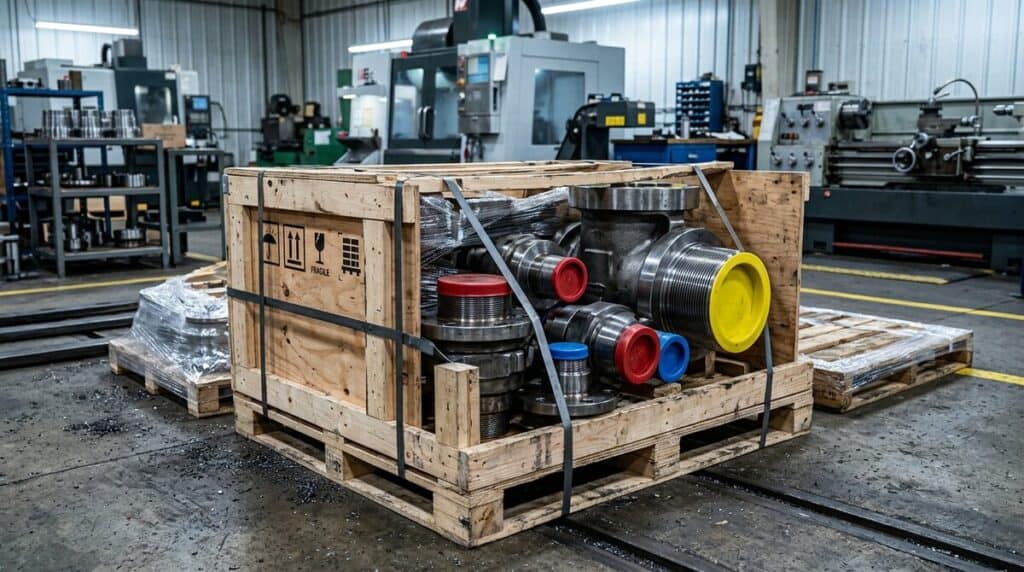
Operators across Texas and the Gulf Coast are running into a problem that had largely vanished from procurement conversations since 2022: the part does not show up on time.
The Federal Reserve Bank of Dallas Energy Survey for the second quarter of 2026 put a number on it. The supplier delivery time index jumped from 4.5 to 31.7, with 36 percent of the 127 responding firms reporting longer delivery times for materials and equipment. The input cost index for oilfield services firms surged from 34.9 to 64.4, and not a single firm reported costs going down. Lease operating expenses climbed from 30.0 to 43.7. Finding and development costs rose from 22.3 to 40.0.
None of this is happening in a slack market. The survey’s business activity index jumped from 21.0 to 46.1, the strongest reading since the second quarter of 2022, and 49 percent of firms reported increased capital spending. Rising demand and rising delivery risk are arriving together, which is the specific combination that turns a routine component order into a schedule problem.
The price data tells the same story at the component level. The Bureau of Labor Statistics producer price index for parts and attachments for oil and gas field machinery stood at 138.4 in March and had climbed to 140.8 by June. That is not a rig index or a vessel index. It is the index for parts, and it moved inside a single quarter.
Service companies are passing the cost through. The prices received index for oilfield services advanced from 9.3 to 24.5, and the operating margin index swung from negative 7.0 to positive 52.2, the first meaningful positive reading in many quarters. Margins are recovering because customers are paying more, not because inputs got cheaper.
The pressure is not confined to crude. Gas-directed activity is being pulled forward by export demand as well, a dynamic examined in U.S. LNG Is Absorbing Qatar’s Lost Volumes and Pulling Gas Drilling With It.
Then the sourcing math changed underneath everyone.
On April 2, 2026, the White House issued Proclamation 11021. Effective April 6, Section 232 metals tariffs began applying to the full customs value of imported articles and their derivatives, regardless of metal content. The prior system, which split customs value between metal and non-metal content, is gone. The proclamation as published in the Federal Register sets the headline rate at 50 percent for metal articles and many derivatives, 25 percent for a second tier, and, in the provision worth reading twice, 10 percent for derivative articles whose steel content was melted and poured in the United States.
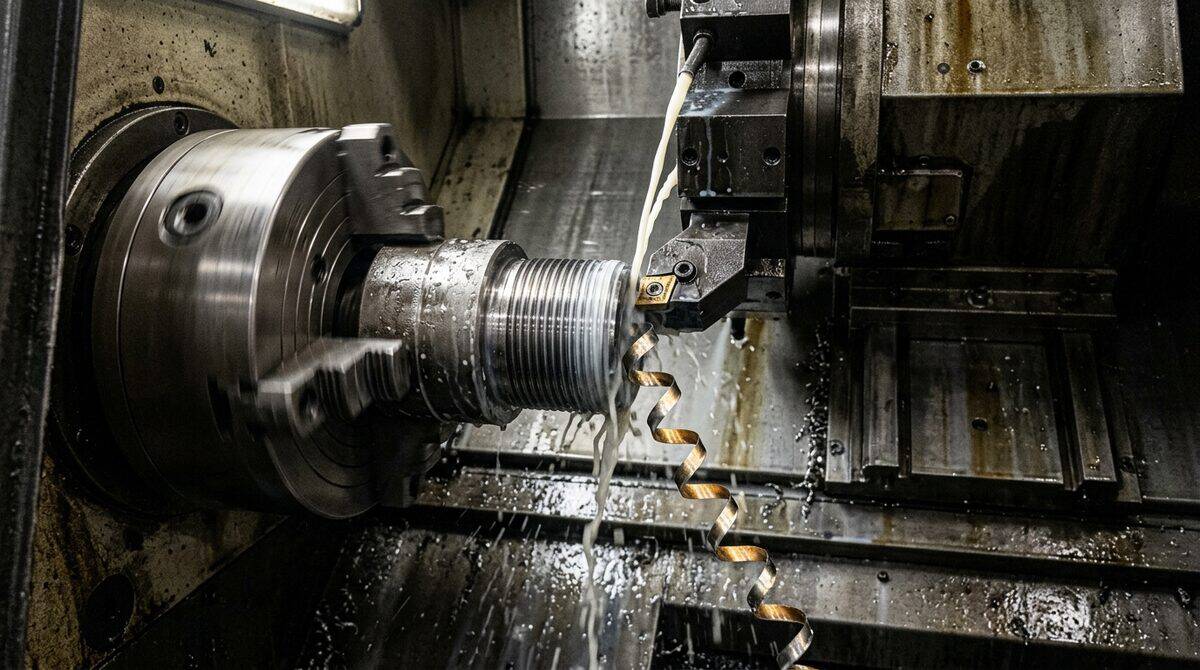
That last clause converts a sourcing preference into a line item. Two functionally identical components, one from foreign billet and one from domestically melted and poured steel, no longer carry the same landed cost. On a 50 percent rate applied to full customs value, the gap is most of the part price.
One category got a temporary reprieve: certain metal-intensive industrial equipment carries a capped 15 percent rate through December 31, 2027, after which the 25 percent rate applies. Anything relying on that carve-out has an expiration date already on the calendar.
The proclamation also terminated the old product exclusion process. Commerce and the U.S. Trade Representative can now add derivative articles to the tariff scope on a rolling basis without notice-and-comment rulemaking, which means a part outside the scope this quarter may be inside it next quarter with no advance signal and no opportunity to comment.
For a drilling program, country of origin has become a scheduling variable and a cost variable simultaneously. An offshore-sourced component carries customs exposure that can change without warning, plus the transit, clearance, and inspection time the delivery index is already flagging. Domestic machining carries neither. That is not a patriotic argument but a risk-adjusted cost argument that happens to point the same direction.
None of this argues for stockpiling. Executives told the Dallas Fed as much: the index for expected capital expenditures next year sat at zero even while current spending accelerated, the profile of an industry funding today’s wells and refusing to commit to 2027. How operators are planning under that uncertainty is covered in The Federal Oil Price Forecast Assumed Peace. The War Resumed Three Weeks Later.
What it does argue for is unglamorous homework: identify the critical small components with no substitute and no shelf inventory, the ones where a six-week slip stops a job, and know where each originates. Most procurement teams can name the lead time on a top drive. Far fewer can name the country of melt for the shear screws in a setting tool.
Those parts are where exposure concentrates. They are cheap relative to the rig time they gate, specified tightly enough that substitution is not casual, and precisely the category the derivative tariff rules now reach.
The audit is straightforward. Pull the bill of materials for every downhole assembly, flag anything single-sourced, and ask each supplier in writing where the material was melted and poured and what the quoted lead time is today. Compare that to what the schedule assumes.
That is the calculation more Texas operators are running this summer, and it does not require a price forecast to justify.
Shamrock Precision: Domestic Precision Components for Oil & Gas
Since 1981, Shamrock Precision has machined precision components for drilling operations across the Permian Basin, Eagle Ford, Bakken, and offshore Gulf programs from its facility in Dallas, Texas.
Our Services Include:
- Shear Screws for Oil & Gas — Swiss CNC-machined shear screws from 0.125 to 0.875 inch, thread tolerances to 0.0005 inches, available in Inconel, stainless steel, brass, and aluminum. ISO 9001 and AS9100 certified.
- Precision CNC Machining — Complete precision machining services with full batch documentation and material traceability.
Ready to Review Your Component Sourcing? Contact Shamrock Precision to discuss your requirements.
Works Cited
- “Dallas Fed Energy Survey: Expansion in Oil and Gas Activity Accompanies Growing Cost Pressures.” Federal Reserve Bank of Dallas, 24 June 2026, www.dallasfed.org/news/releases/2026/nr260624des. Accessed 30 July 2026.
- “Producer Price Index by Commodity: Machinery and Equipment: Parts and Attachments for Oil and Gas Field Machinery and Equipment.” FRED, U.S. Bureau of Labor Statistics and Federal Reserve Bank of St. Louis, 15 July 2026, fred.stlouisfed.org/series/WPU119106. Accessed 30 July 2026.
- “Strengthening Actions Taken To Adjust Imports of Aluminum, Steel, and Copper Into the United States.” Proclamation 11021 of 2 Apr. 2026. Federal Register, vol. 91, 9 Apr. 2026, p. 18201, www.federalregister.gov/documents/2026/04/09/2026-06960/strengthening-actions-taken-to-adjust-imports-of-aluminum-steel-and-copper-into-the-united-states. Accessed 30 July 2026.